A couple of weeks ago Christine Emba wrote a piece for the New York Times about the grim state of young men in her social circle these days:
They struggled to relate to women. They didn’t have enough friends. They lacked long-term goals. Some guys — including ones I once knew — just quietly disappeared, subsumed into video games and porn or sucked into the alt-right and the web of misogynistic communities known as the “manosphere.”
....Women are surging ahead in school and in the workplace....Men now receive about 74 bachelor’s degrees for every 100 awarded to women....In 2020, nearly half of women reported in a TD Ameritrade survey that they out-earn or make the same amount as their husbands or partners.
This essay is part of a common genre nowadays—there's probably a whole shelf of books on the subject—and it happened to be the third or fourth I had read in a single day. That's just coincidence, but something about it got me curious: just how many of these loser men do we have? And is it increasing?
In the conventional narrative, these men are:
- Young
- Have a high school education or less
- Have a dead end job
- Are single
- Live alone or in their parents' basement
There's no way of knowing how many of these young men there are. That's partly because the definition is necessarily vague, and partly because the numbers don't exist. I didn't even bother trying to quantify it. Instead I went down a bit of a rabbit hole, collecting data related to all this stuff just to see what overall impression it left. We can start with the best known statistic:
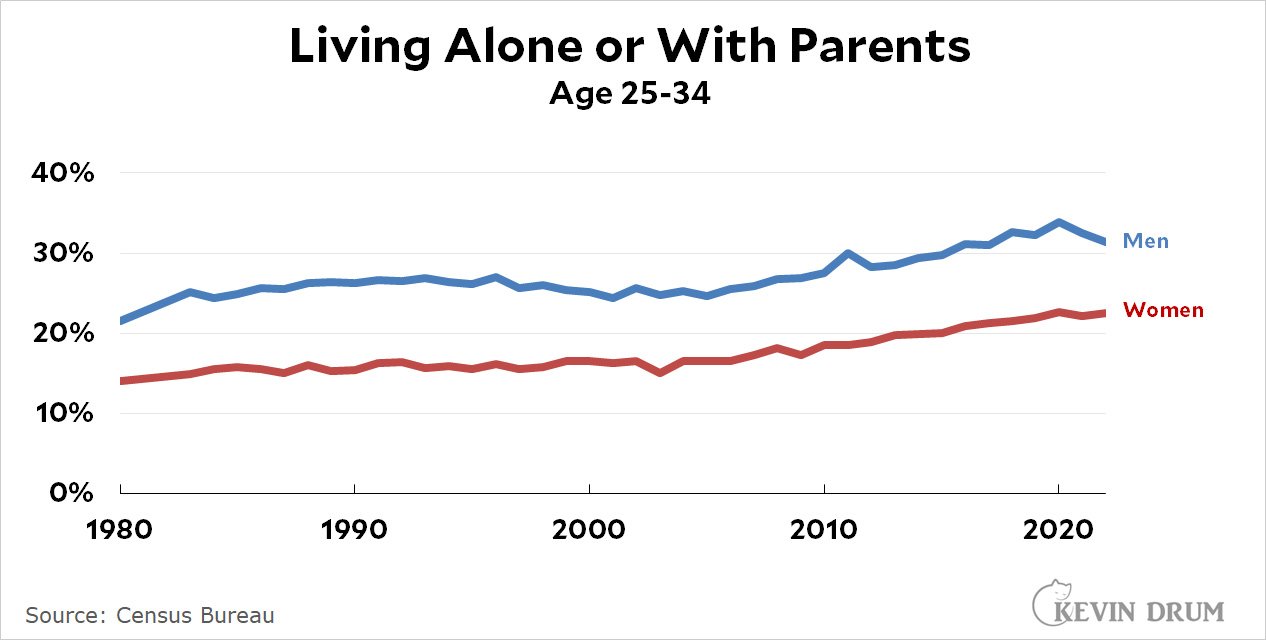 There's no question that young men live alone or with their parents more than they used to. At the same time, this number has increased just as much for young women. There's nothing unique to young men here.
Next up is jobs. There are fewer young men working than in the past:
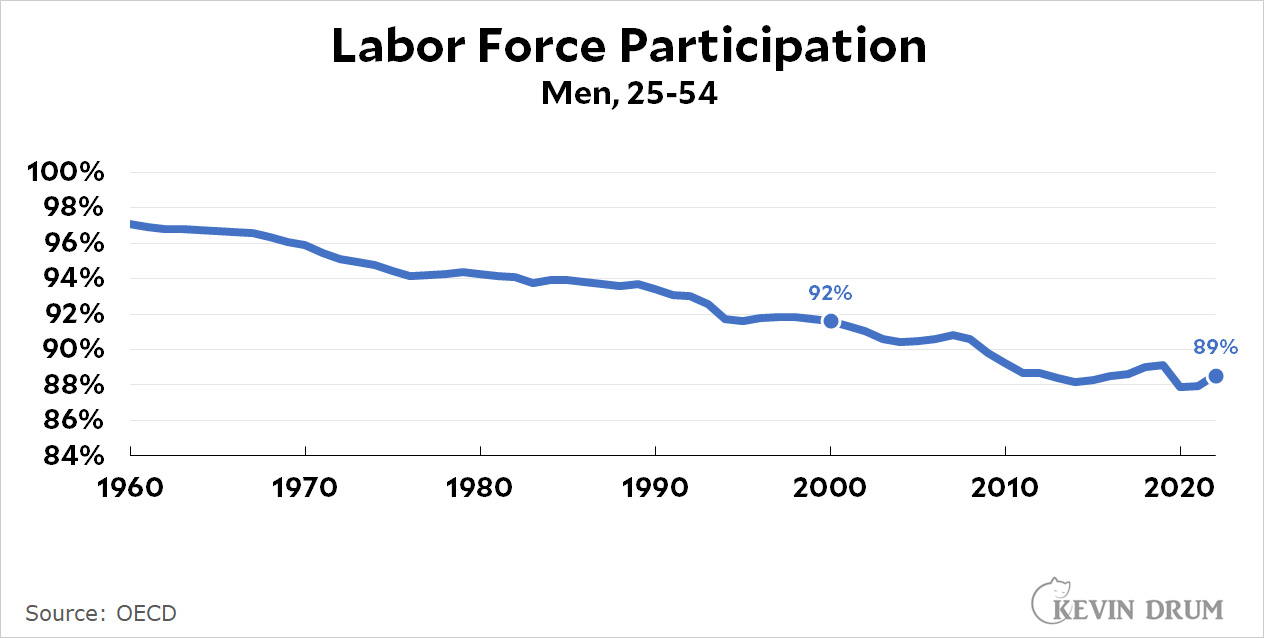 Note, however, that this is true of all age groups and it's nothing new. Labor force participation has been steadily declining for more than 60 years. The 3% drop since 2000 is just the continuation of a trend, not something new about modern manhood. Plus there's this:
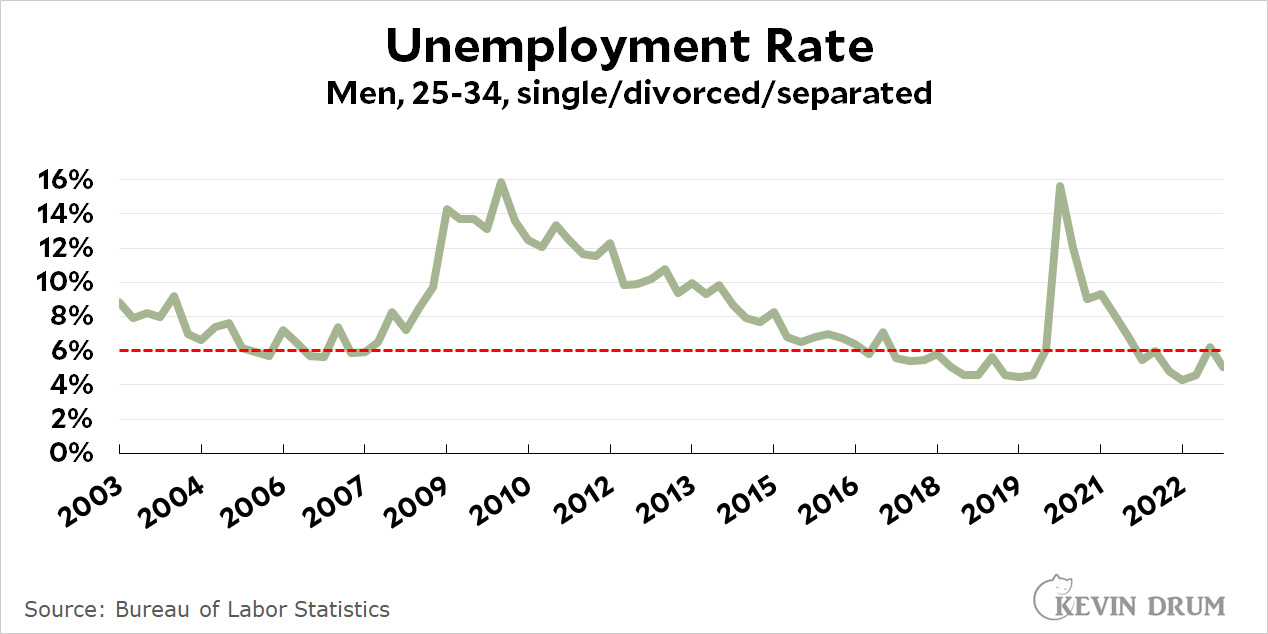 This is the unemployment rate specifically for single young men, and it's the same as it's ever been. There's also this:
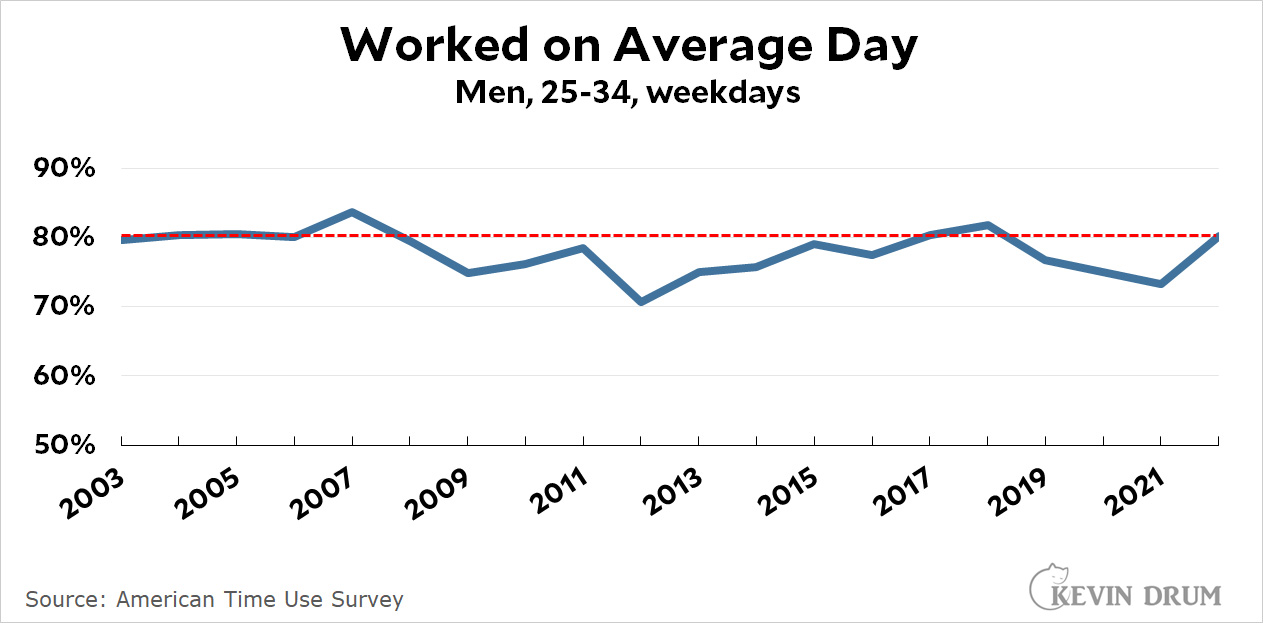 The decline in work doesn't show up at all in time use surveys. And young, low-income, high school educated men are earning as much as ever:
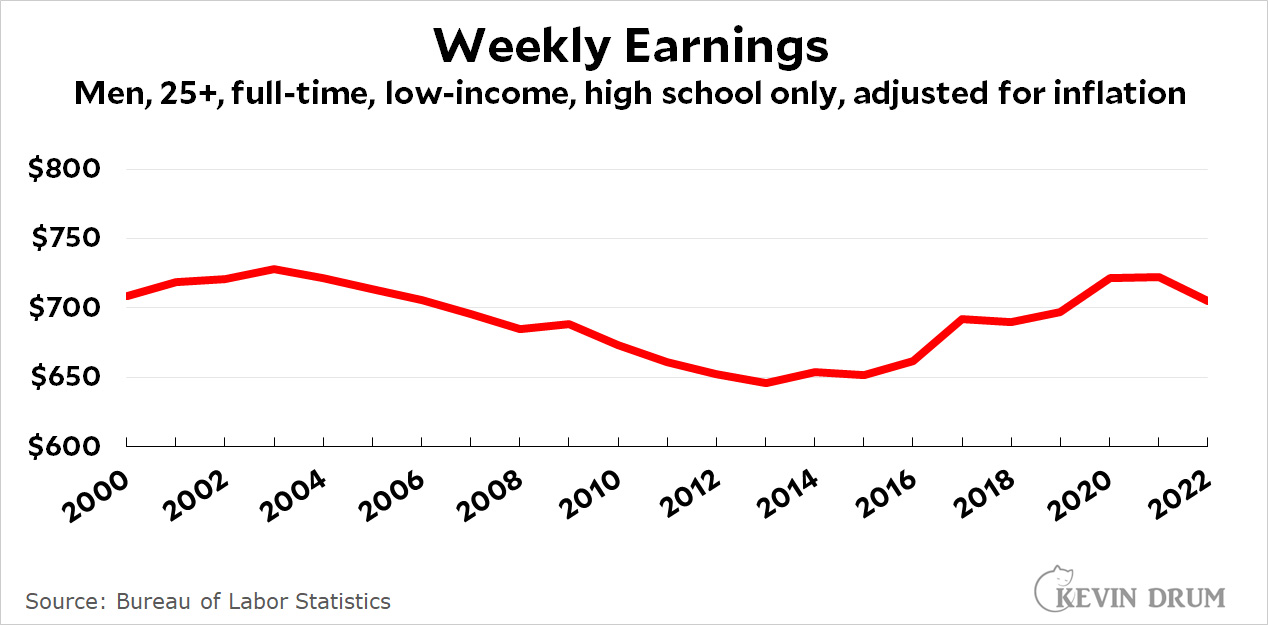 This is for full-time workers, so maybe it's because fewer young men are working full time? No:
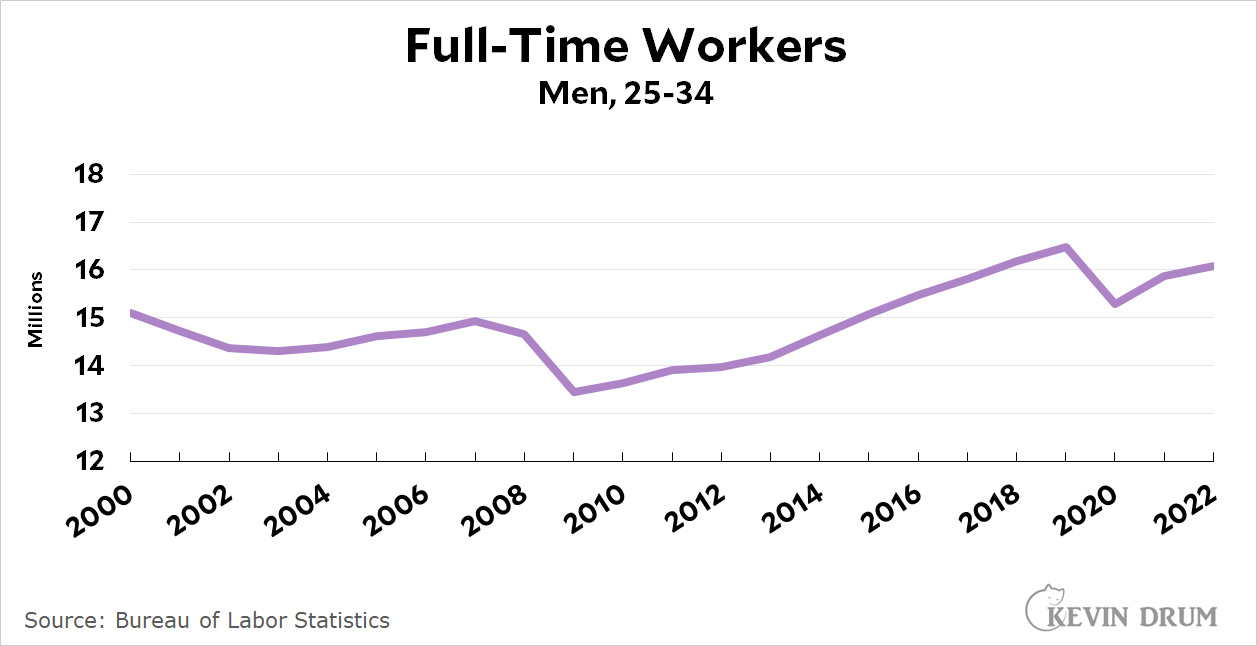 More young men are working full time. Now let's change gears. How about that business of college attendance declining? It turns out it's not true in any practical sense:
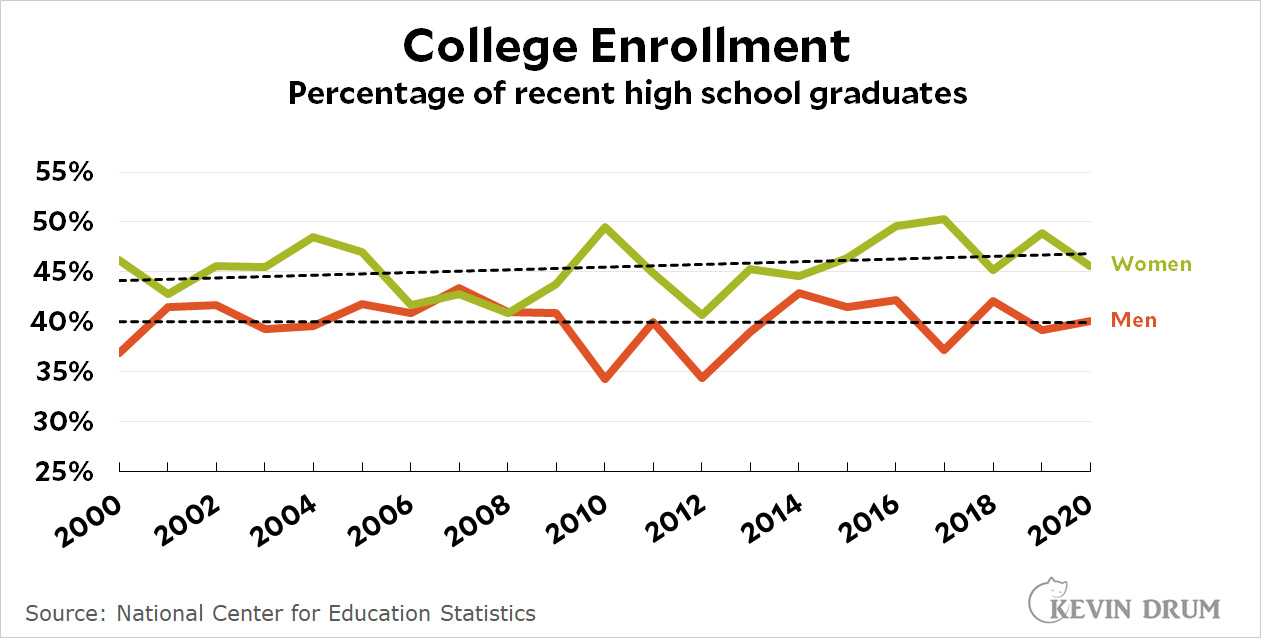
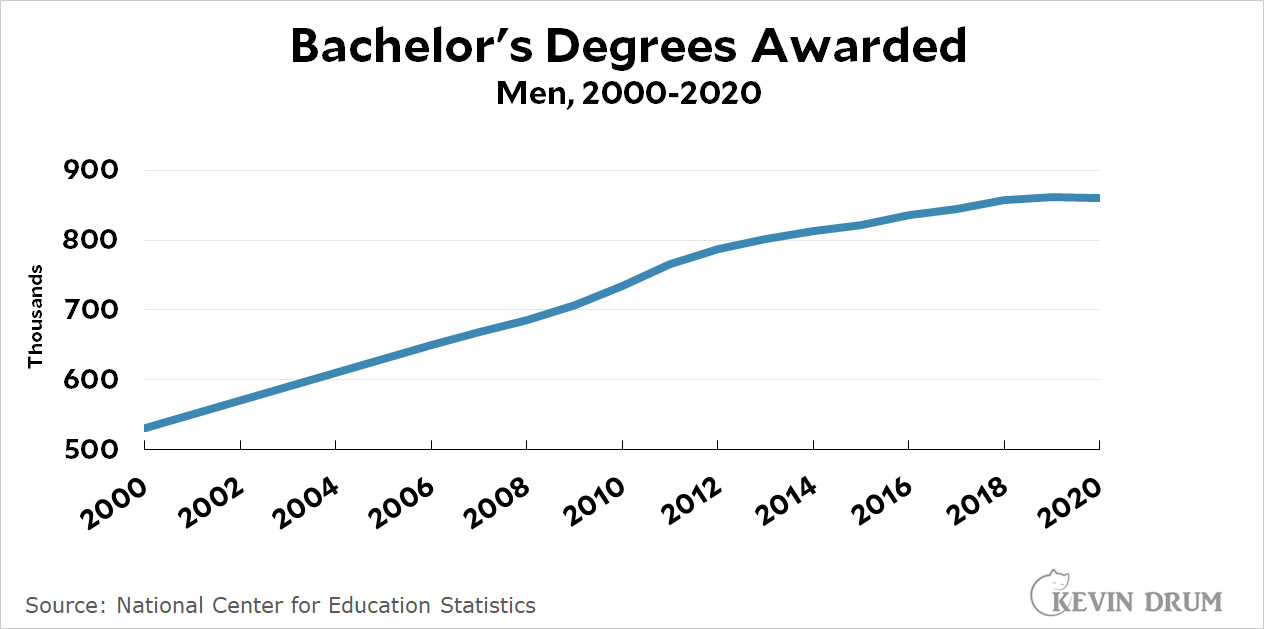 Enrollment of men is flat and the number who finish up and get a degree is way up. It's true that women outnumber men at universities these days, but that's not because there are fewer men. It's because there's been a modest increase in the number of women.
How about friends? Are young men hanging out in their basements and not socializing?
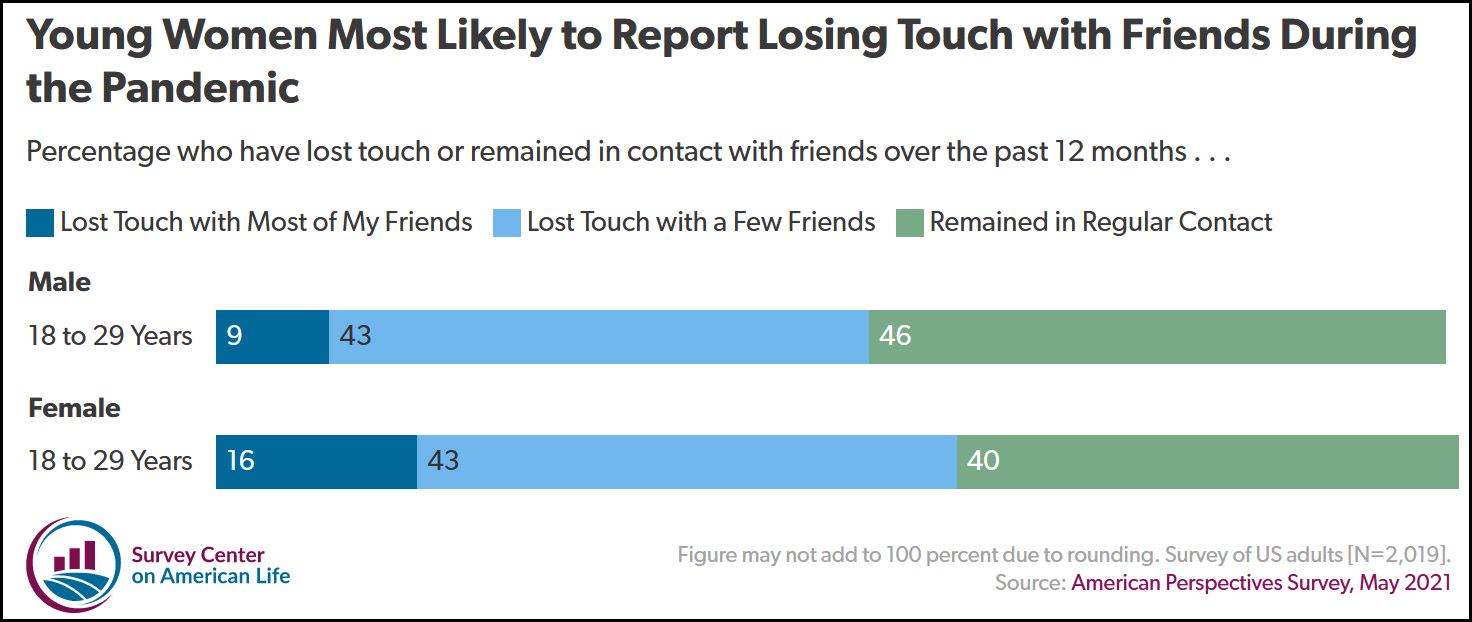
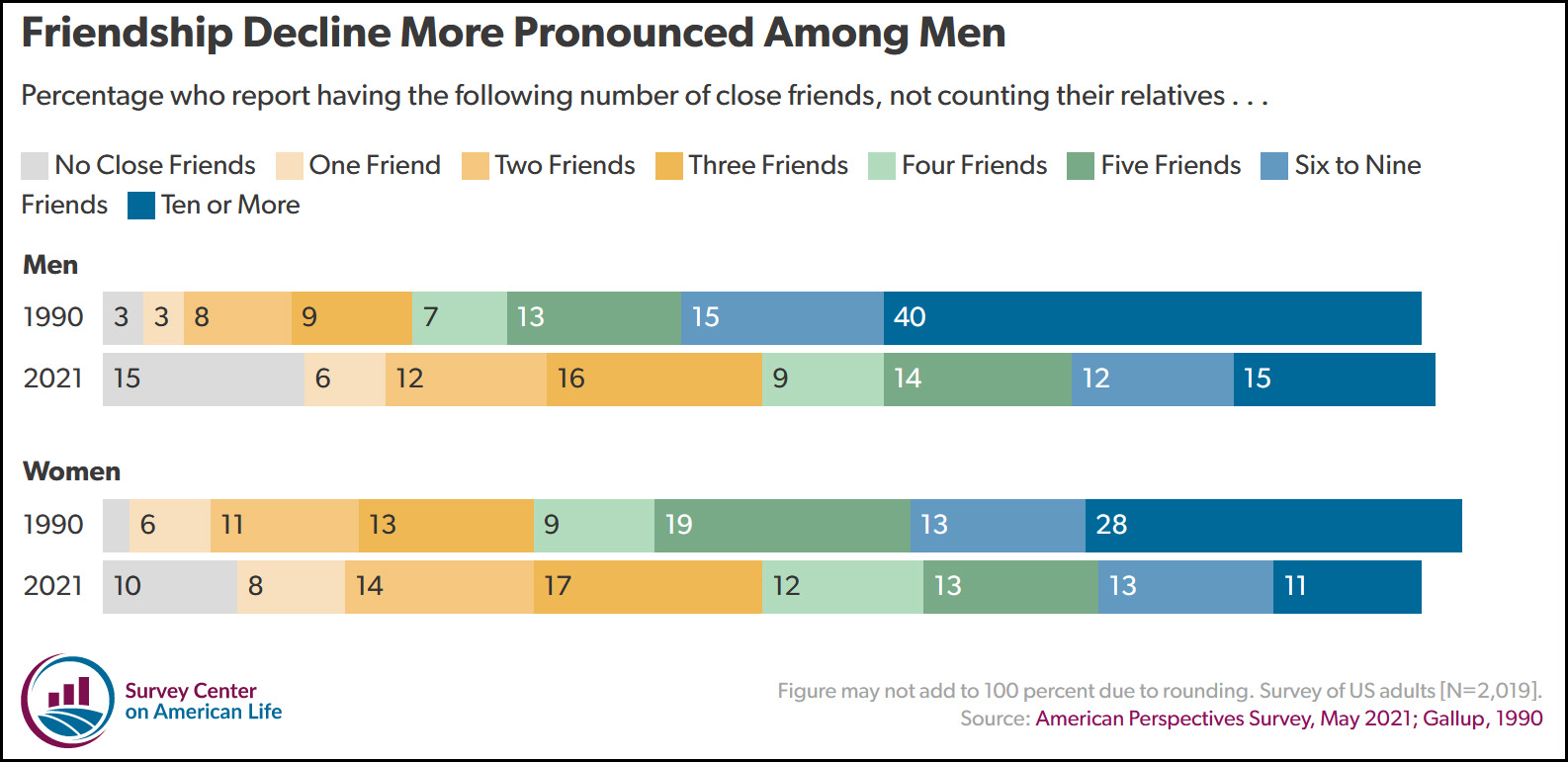 During the pandemic, young women lost touch with more friends than young men. For all age groups, a 2021 survey reported that 33% of men said they had two or fewer friends compared to 32% of women. There's no difference. At the same time, 43% of men reported five or more friends compared to only 37% of women.
So: young men are working about as much as ever. They make as much money as ever. They get more college degrees. And they have about as many friends—and keep in touch with them—as women do.
There are, obviously some number of young men who fit the description of loser and listen to Andrew Tate podcasts or read Jordan Peterson books. But overall, the picture of young men in America doesn't suggest much of a crisis. After all, there have always been plenty of awkward young men and awkward young women. It's hard to tease out any sense of increase over the years from the evidence about work, college, and friendship.