Over at National Review, Jason Richwine comments on one of my hobby horses:
Early in his first term as Florida governor, Ron DeSantis pressed the legislature to mandate universal E-Verify, the online tool run by the Department of Homeland Security that allows employers to confirm that their employees are legally authorized to work in the U.S. Unfortunately, business interests lobbied hard against it, and the bill that eventually reached the governor’s desk required E-Verify only for the public sector and its contractors....With greater political capital thanks to his smashing victory last week, DeSantis should try again for universal E-Verify.
The Republican Party has long been viewed as a happy collaboration of business conservatives and social conservatives whose interests rarely conflict. Business conservatives want low taxes and less regulation while social conservatives want abortion restrictions, gun rights, and so forth. Both sides can usually ignore the other without a problem.
But what happens on the odd occasion when a real conflict breaks out? Immigration is a great test case. Social conservatives want less of it but business conservatives want continued access to lots of cheap, docile labor. Who wins?
Let's take a look. Mandatory E-Verify works. This is why business conservatives hate it. Building a wall, by contrast, is little more than emotional symbolism, which is why social conservatives love it and business conservatives don't care one way or the other.
So what did Donald Trump do? Naturally he built a wall and ignored E-Verify. Business conservatives were happy since they knew the wall was little more than a con with no lasting impact. What did the Florida legislature—which was 70% Republican at last count—do when they were given a choice? They voted down mandatory E-Verify. Business conservatives were satisfied yet again and social conservatives were just sort of confused. They'd been suckered one more time.
So the answer to who really controls the Republican Party is: business conservatives. Nearly everyone who's really thought about it agrees that the most effective single thing we could do to rein in illegal immigration is to pass mandatory E-Verify at the national level and fund it with fines levied on employers. That would piss off business interests, which is probably the best indication that it's actually effective. It's also why it's consistently dead in the water.
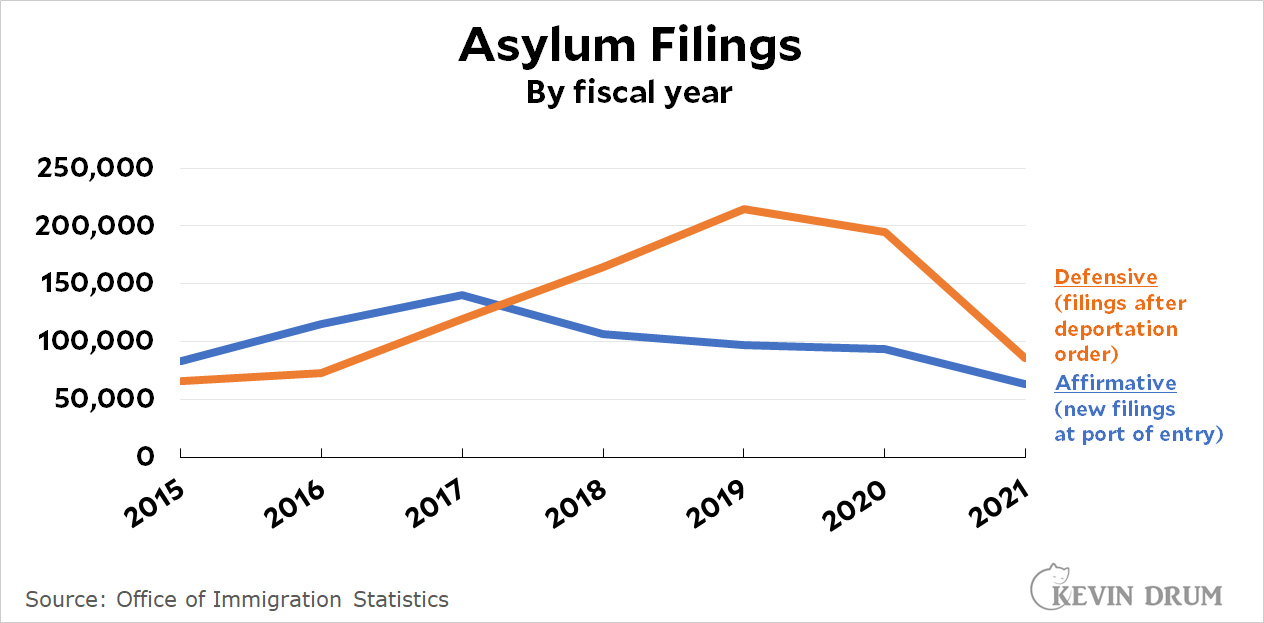
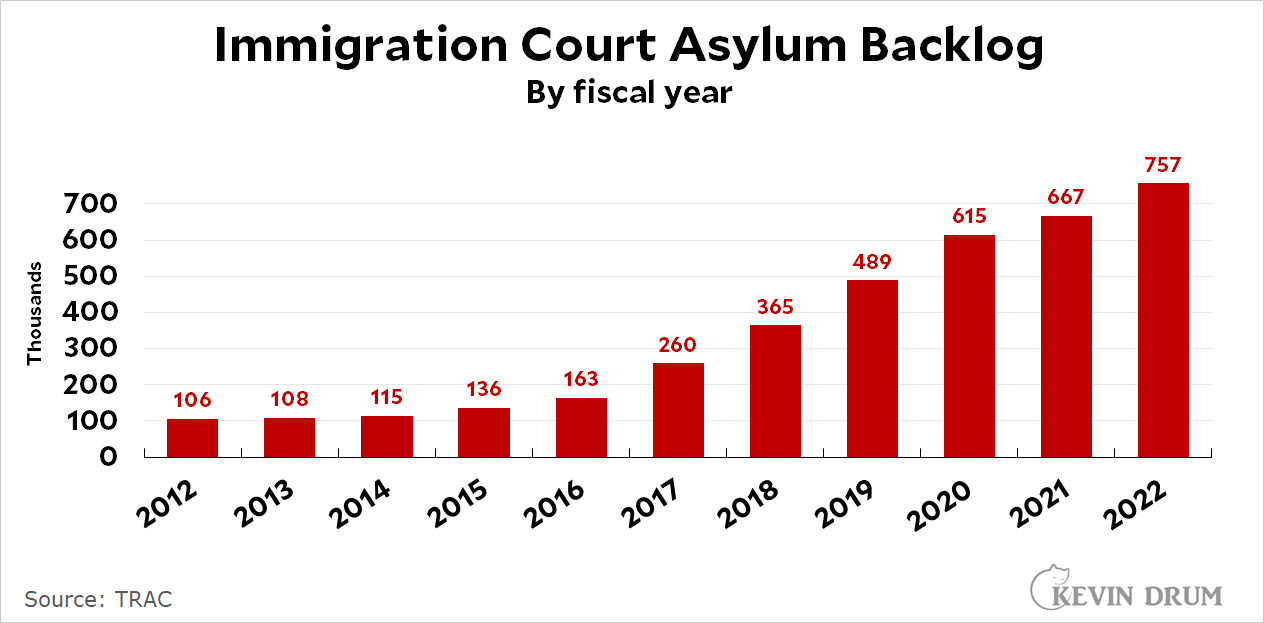
Now, this would reduce ordinary illegal immigration, but it wouldn't necessarily have any effect on asylum filings, which represent a whole different problem. That requires a massive expansion of the judicial system so that asylum cases can be resolved quickly and fairly. But that's a topic for another day.