The first federal program to give cash to poor people was called Aid to Families with Dependent Children (AFDC), passed in 1935 as part of the New Deal. It was aimed at widows with children, a group that, at the time, everyone agreed should be supported with cash specifically so they didn't have to work and could instead devote time to raising their families.
In the '60s AFDC was steadily expanded to include anyone with children, which made the program increasingly unpopular. Widows during the Great Depression were one thing, but single mothers without jobs during good economic times were quite another—especially because so many of them were now urban and Black. In the '90s, the AFDC rolls started to increase, reaching a high point of 14 million recipients, and public support for cash payments designed to allow women not to work floundered. As a result of all this, Bill Clinton promised during the 1992 presidential campaign to "end welfare as we know it."
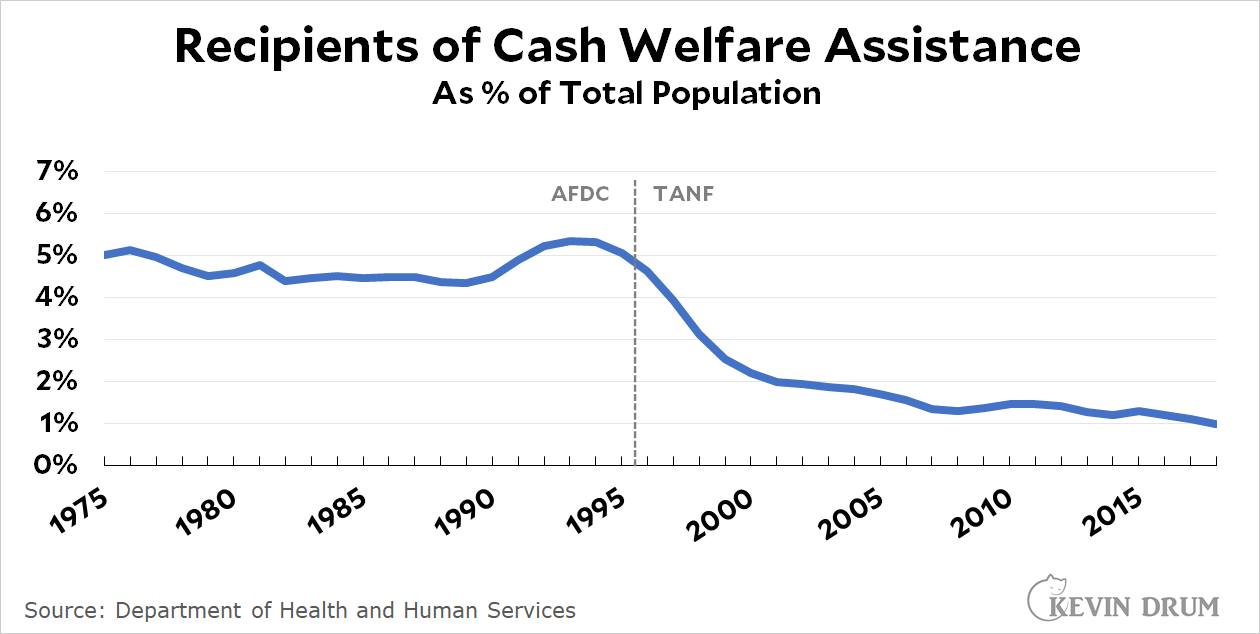
In 1995 AFDC was abolished and replaced with Temporary Assistance for Needy Families (TANF). Its emphasis was on work, and it put limits on how long unemployed mothers could receive assistance. As a result, the TANF rolls fell dramatically:
The average benefit from AFDC slowly dropped in the '70s and '80s, and that decline continued after the switch to TANF:
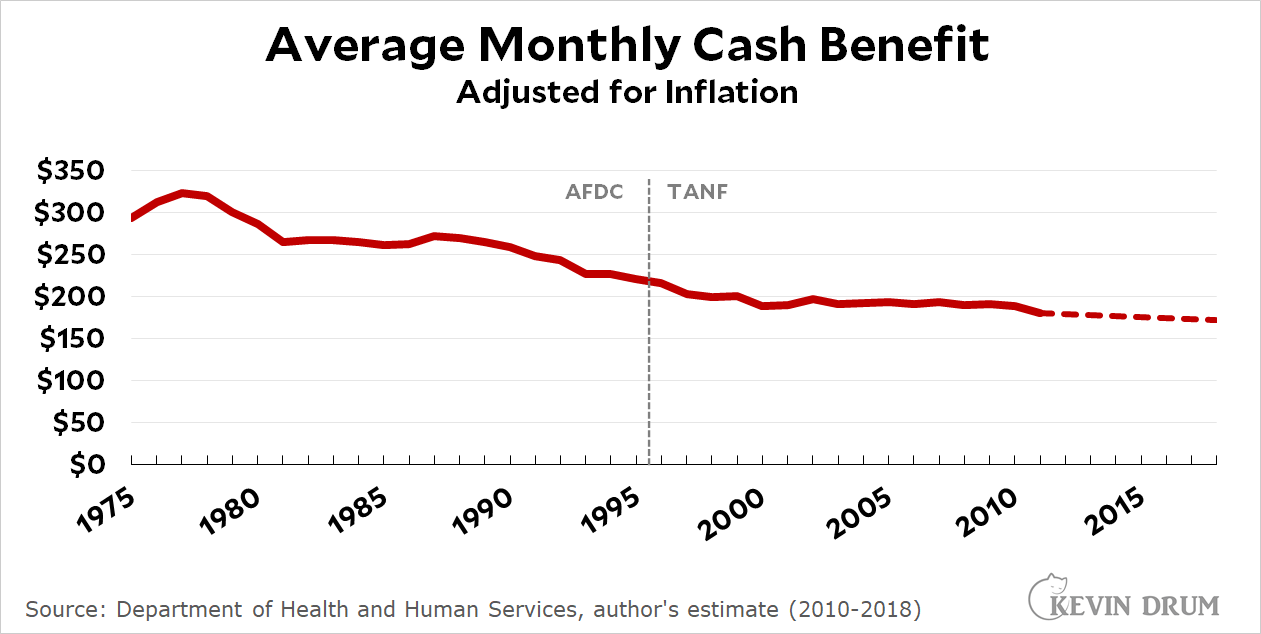
Today, the TANF rolls have dropped to about 3 million people and monthly checks average about $170. For practical purposes, cash welfare has been all but eliminated.
Data comes from the Department of Health and Human Services. Total recipients are here (Appendix A, TANF Table 1) and here (Table 7 Indicator 3). Average benefits are here through 2011 and extrapolated from CBPP estimate of average 2010-2020 decrease here (Appendix Table 3) for 2012-2018.