A couple of days ago Farhad Manjoo wrote that office workers aren't sick of work, they're sick of the commute to work:
For many, the pandemic-era shift to remote work proved that all the schlepping was unnecessary....They can get a lot more done — in their work lives and in the rest of their lives — if they skip the commute.
Liberty Street Economics, a blog that features writing from New York Fed analysts, reported last year that collectively, Americans now spend 60 million fewer hours per day traveling to work. That’s 60 million hours for which they weren’t being compensated that they can now spend exercising, taking care of their children, getting a bit more sleep and starting their workday earlier or ending it later.
There's obviously something to this. No one likes commuting, and barren downtown office spaces offer evidence that there's less of it these days. But that 60 million hour figure is for the pandemic year of 2020 and things have changed since then. Here are a couple of suggestive charts.
First up is the crudest possible measure, Vehicle Miles Traveled per working-age person (for the first quarter of each year):
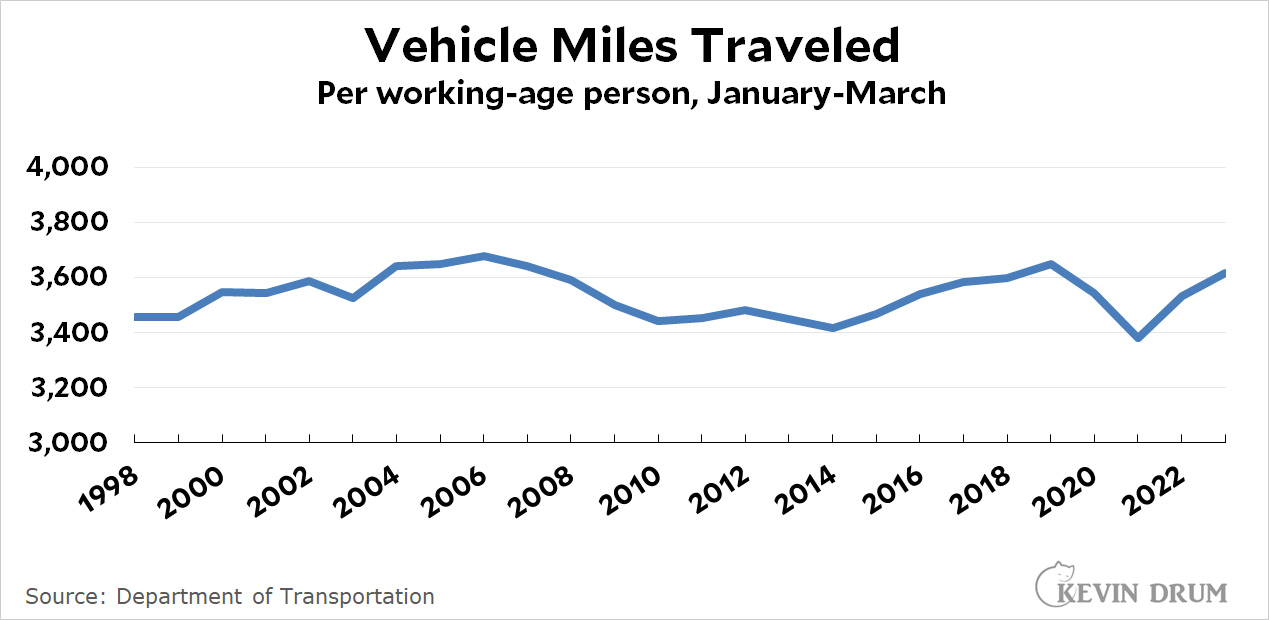 VMT dropped substantially during the pandemic era, but it's since rebounded and is close to its pre-pandemic level. People are back to driving as much as they ever were.
Next up is a closer look specifically at commute times via the American Time Use Survey. This time we can go through the end of 2021 and the numbers tell a different story:
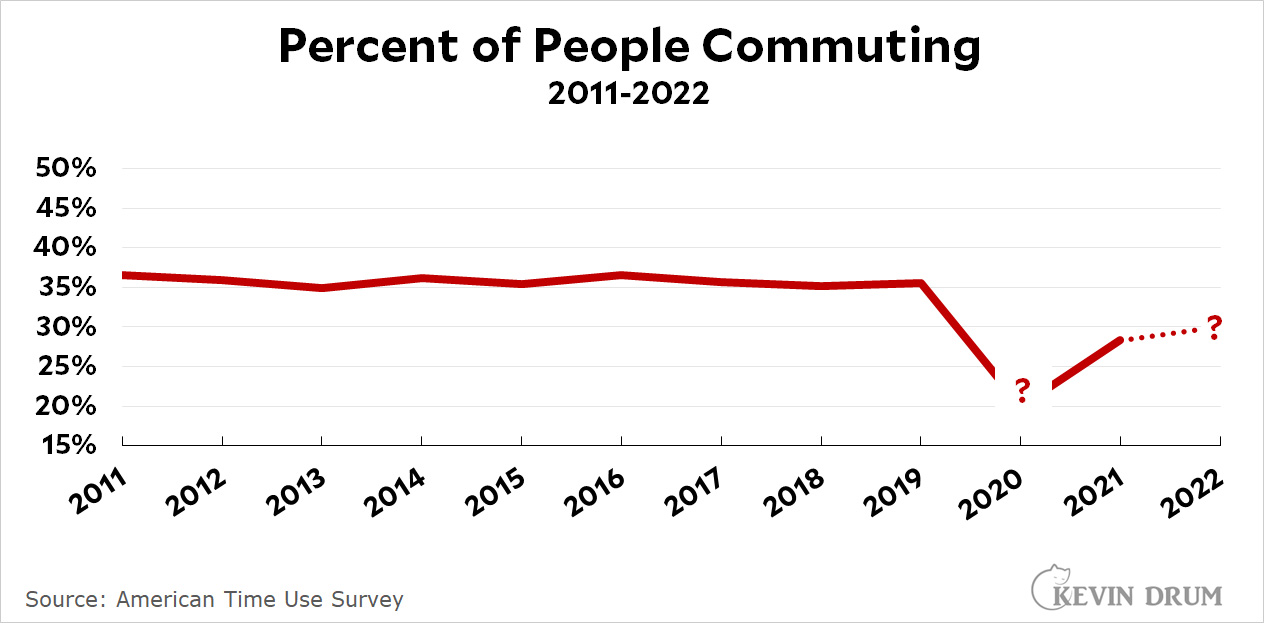 We don't know what happened in 2020 because ATUS was interrupted during the pandemic, but it's safe to say that commutes were down—probably quite a bit. A total of 60 million hours doesn't seem unreasonable. This rebounded in 2021, but only partly: 35% of people commuted before the pandemic but only 28% in 2021—though I imagine that number has increased since then. However, average commute time among those who still commuted was barely changed, down less than two minutes.
This all suggests that, in fact, commuting is returning to its old levels, though slowly. Workers might or might not like it, but they're mostly doing it.
And one other thing. There's a reason bosses want their workers coming into the office. Here's a chart from Liberty Street Economics based on a careful analysis of what people did with the time they saved from their commute in 2020. It's pretty startling:
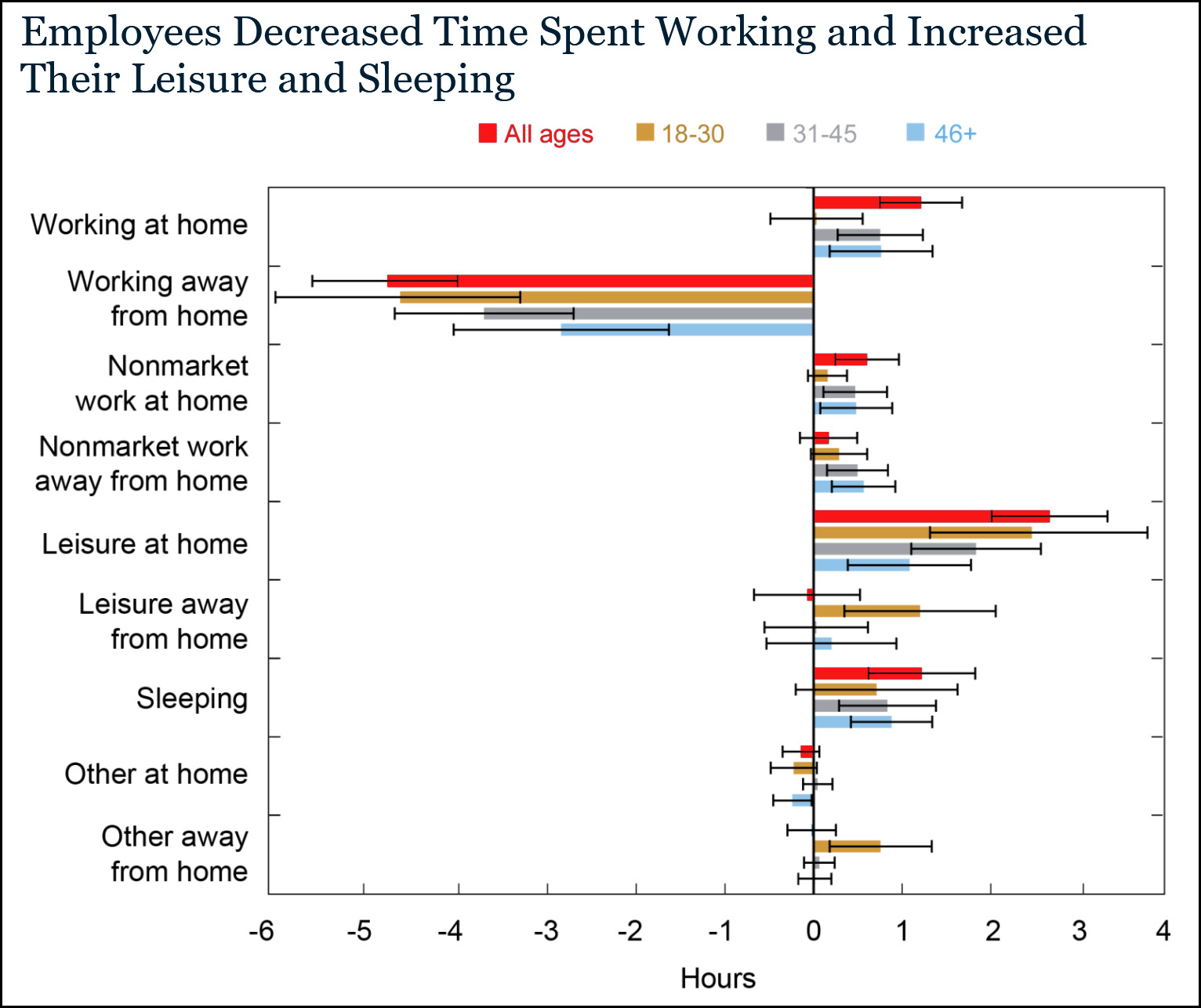 Look at the red lines at the very top representing all age groups. Non-commuters worked a lot less at the office and made up for it with only a little more work at home. Altogether, in 2020, they reduced their total working time by a whopping 3.5 hours per day, replaced mostly with leisure and sleep. Their productivity might have remained strong, but they simply weren't putting in the hours. Is it any wonder that with the pandemic over, CEOs and managers want to see butts in chairs where they can be sure everyone is really working?
UPDATE: The second table above originally showed commute minutes per day. I changed it to the percent of people commuting because that gives a better idea of just how much commuting has (or hasn't) fallen off following the pandemic.