Is remote work at high levels here to stay? My guess has been that it isn't, though obviously it was a previously growing trend that was bound to get a tailwind from the pandemic.
It's still too early to draw any firm conclusions, but I figured it was time to mark my views to market and take a look at where we are now—or try to, anyway, since this is no easy task. First up, here's my best estimate of the percentage of workers who primarily work remotely:
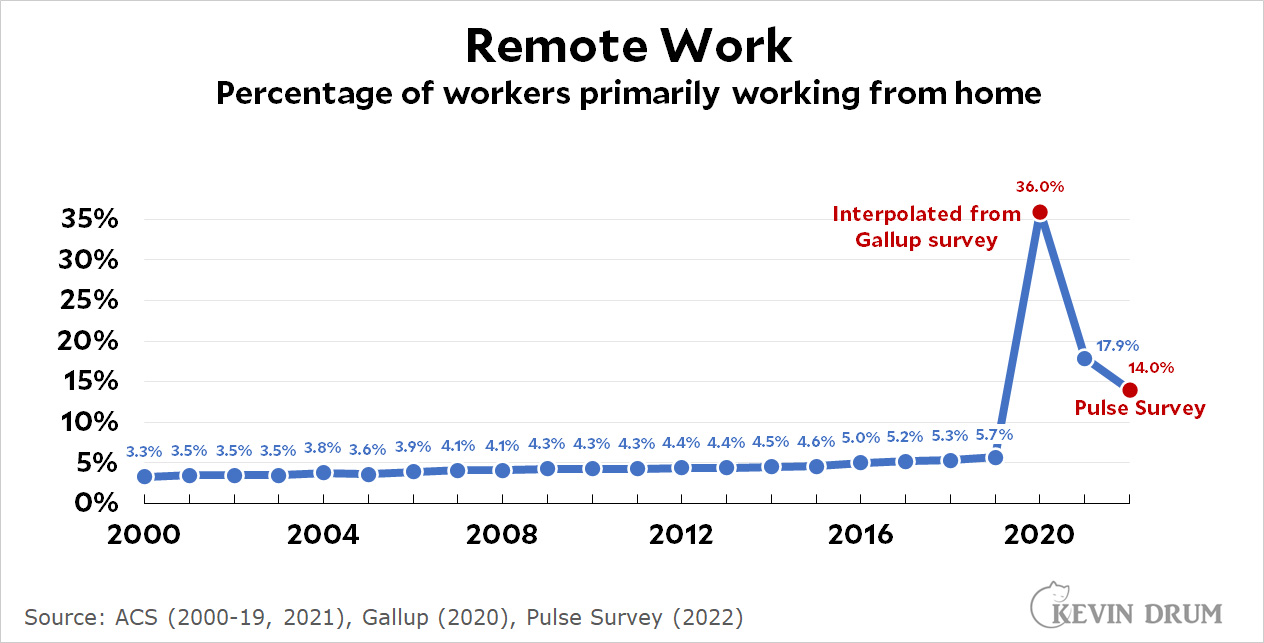 This is very rough since no one was much interested in this question before the pandemic and data has been spotty during and after the pandemic. Question wording is also critical. Most of this data is from the Census Bureau's American Community Survey (here and here), where it's extrapolated from commuting rates. But there was no ACS in 2020, so I interpolated a Gallup poll which suggested twice as many people worked from home in 2020 compared to 2021. Finally, for 2022, I used the latest Pulse Household Survey from the Census Bureau, which asks directly about working from home.
This is obviously complicated and possibly wrong since these numbers aren't entirely comparable, but I think they're about as close to accurate as we can get at the moment.
As the chart shows, working remotely has come down a lot since its pandemic peak, mostly for obvious reasons. But there's also this from LinkedIn:
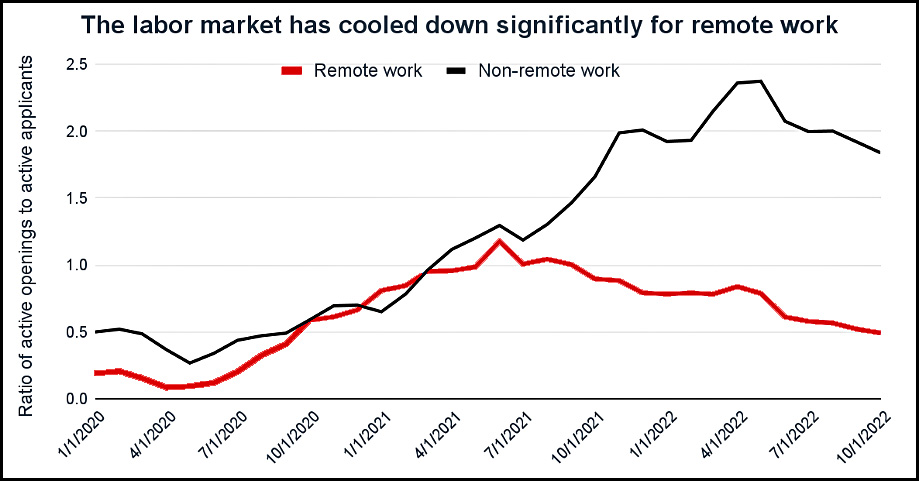 This chart suggests that aside from the slowdown in COVID, the decline in remote work is largely due to employers getting tired of it. If you invert the chart data you get the number of applications per open job, which until mid-2021 was about the same for remote and non-remote jobs. Since then things have diverged dramatically: employers get a lot more applications for remote work (two for every job) than for each non-remote job (half an application per job). This tells us that workers remain eager for remote jobs, but it turns out that employers have decreased the number of remote jobs they offer anyway (from 17% of all job openings at the start of the year to 14% today). Employers want their workers in the office.
Next up is another marker of working in an office rather than from home. It's the vacancy rate of office space:
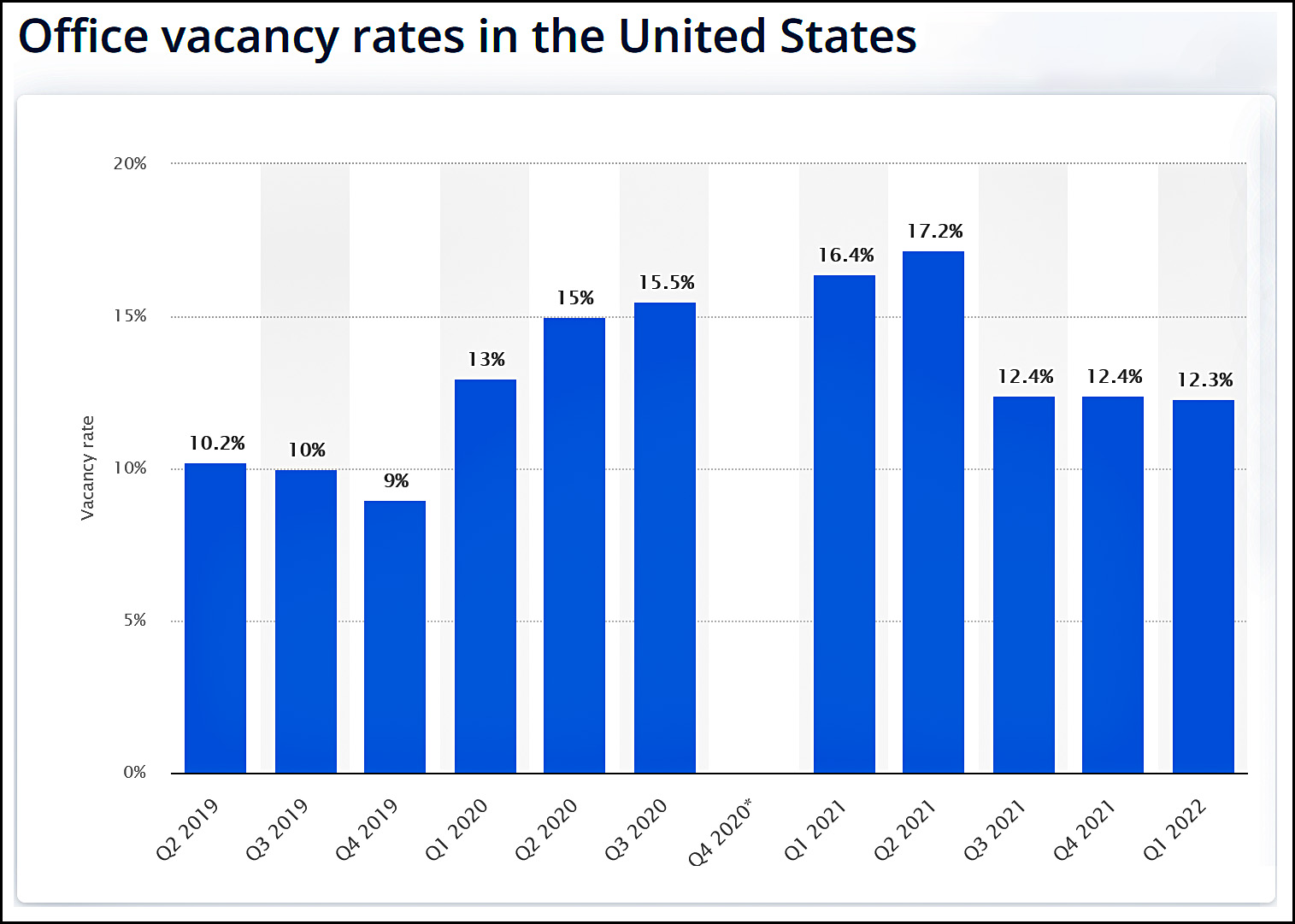 This might surprise you, but vacancy rates change slowly thanks to long-term lease agreements. Still, vacancy rates have recently come back down to nearly their rate before the pandemic. This wouldn't happen unless corporations have been actively re-signing leases in anticipation of getting their workforce back to the office fairly soon.
But this is just official vacancy rates. How much of this office space is actually being used? Here's an estimate from Moody's:
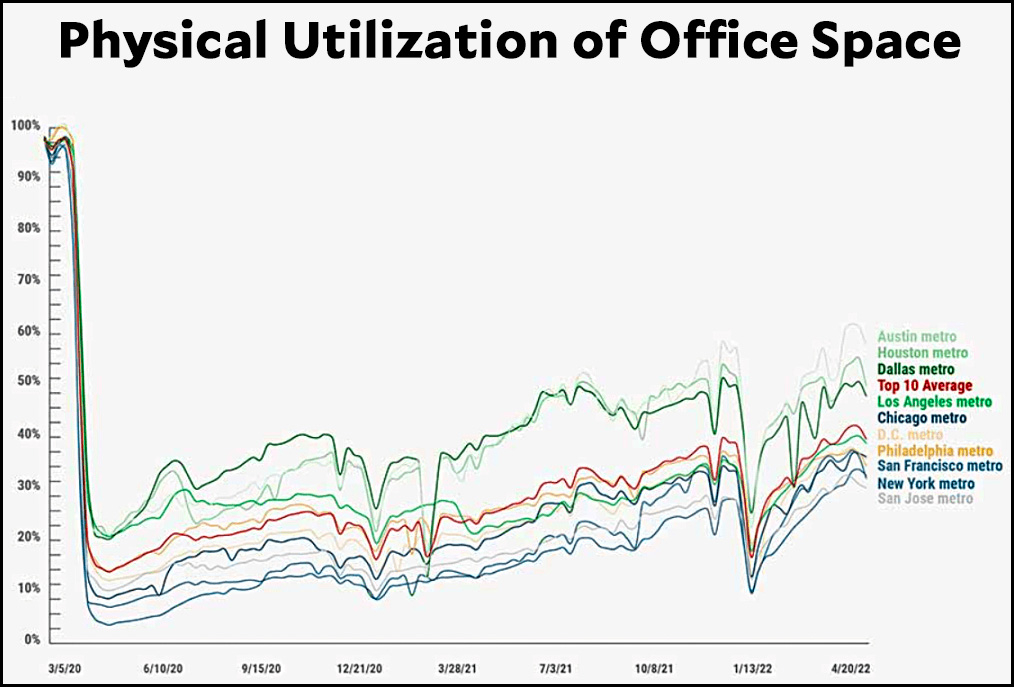 According to Moody's, the actual number of people using their offices plummeted from 95% pre-pandemic to around 15% after the pandemic hit. It has since risen to about 40%. This is progress, obviously, but still nowhere near 95%.
Finally, here are two charts with some interesting tidbits. First up is this survey from a recent Microsoft report on hybrid work:
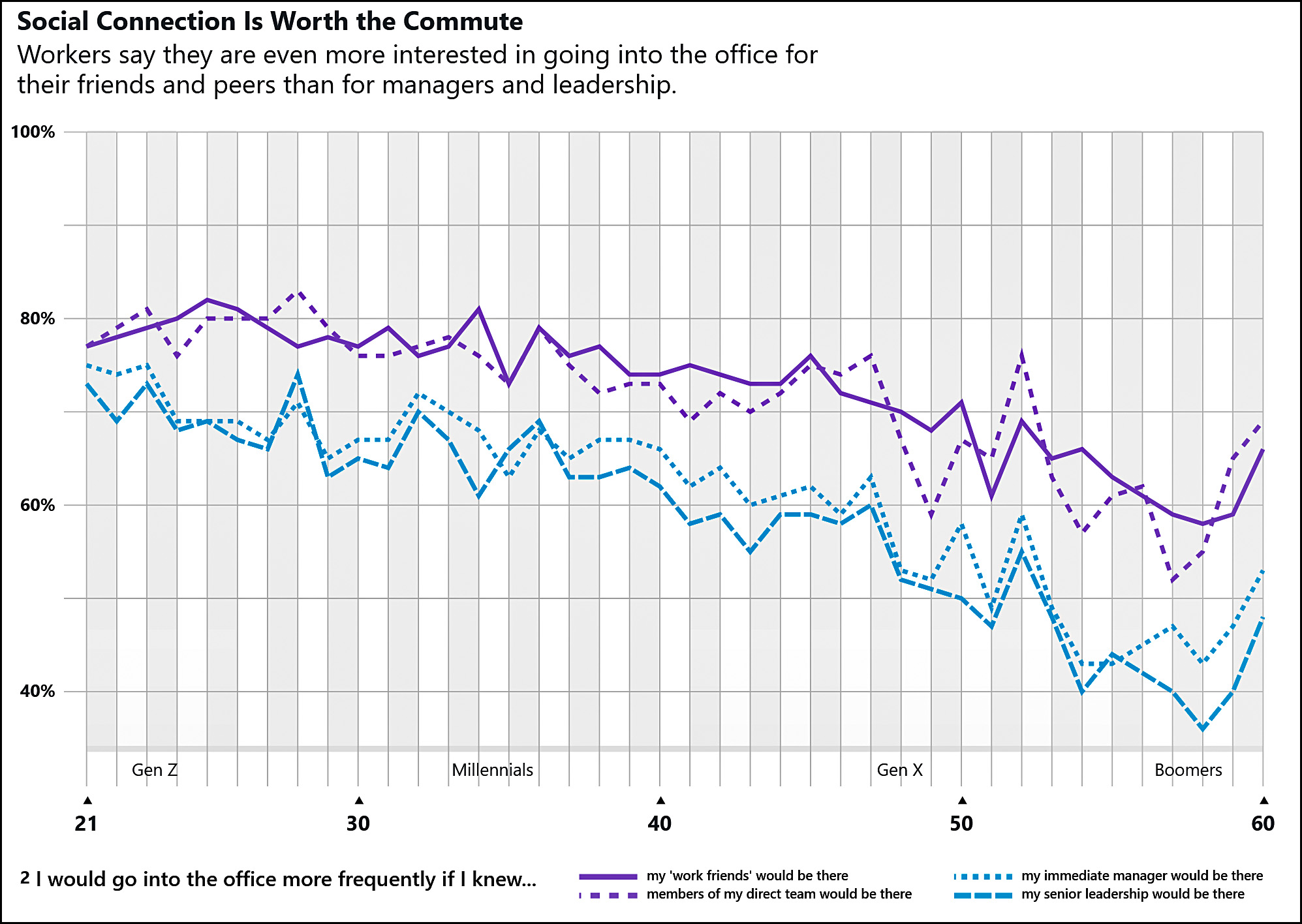 It's not surprising that people are more likely to come into the office if they think their friends will be there. But what is (a little) surprising is that this motivation for office work is by far the strongest among young workers. Contrary to popular myth, young people are generally hard workers but they're also, by far, the ones who say they want to work remotely. Perhaps, though, this is really only true if they dislike their office and don't have many friends there?
Finally, here's an excerpt from a chart in a recent McKinsey report:
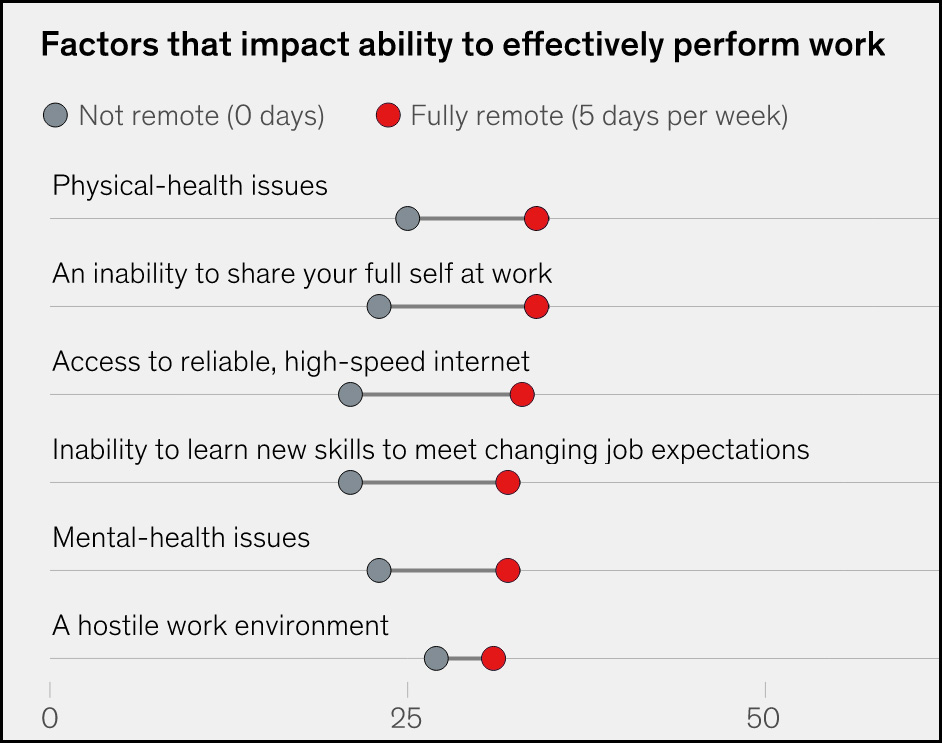 This is interesting because every single issue McKinsey polled produced more negative problems for remote work than in-person work. Some of these are odd: for example, why would physical health issues be worse for those working from home? Ditto for a hostile work environment, unless you're stuck in a really bad marriage.
Regardless, what this shows is that, on average, a lot of workers understand already that there's a price to remote work. It's possible that this understanding will spread as remote work wears on. It's not the panacea that many people think it is.
As I said at the top, it's still too early to draw any firm conclusions from any of this. I continue to think that once things have shaken out, remote work will be more widespread than it was before the pandemic, but still has a ways to fall from today's numbers. I'd put my guess at 8-10% of the workforce.