In the New York Times today, James Forman Jr. and Kayla Vinson take another shot at the "superpredator" theory of the mid 1990s:
In January the Connecticut Supreme Court reversed the 60-year sentence imposed on Keith Belcher, a Black teenager, for sexual assault and armed robbery committed when he was 14. Mr. Belcher was sentenced in 1997, at the height of the superpredator panic....Judge Michael Hartmere [] said this at Mr. Belcher’s sentencing hearing:
Professor DiIulio of Princeton University has coined the term “superpredator,” which refers to a group of radically impulsive, brutally remorseless youngsters who assault, rape, rob and burglarize. Mr. Belcher, you are a charter member of that group. You have no fears, from your conduct, of the pains of imprisonment, nor do you suffer from the pangs of conscience.
Judge Hartmere then imposed a sentence that could have kept Mr. Belcher incarcerated until his mid-70s....But Mr. Belcher got lucky. Because the trial judge explicitly cited a theory that had been proved wrong (in 2001, Professor DiIulio acknowledged as much), Mr. Belcher’s court-appointed attorneys, Natalie Olmstead and Alexandra Harrington, challenged the sentence on the grounds that it was based on “materially false information.” What could be more false, they asked, than a theory widely disavowed, including by its own author?
I hate to see this. But then again, I also hate to debunk it.
But let's review the whole dreary mess. First off, DiIulio wasn't wrong: The early to mid 1990s represented the peak of crime committed by lead-poisoned teenagers. These kids, through no fault of their own, had gone through childhood with high levels of lead in their bloodstream and this had caused permanent damage to their brains. Among other things, some of them were turned into remorseless predators with little impulse control, little fear of being caught, and a sociopathic indifference toward harming others.
The only thing DiIulio was wrong about was the cause of this wave of superpredators. He saw a rise in their numbers and assumed it would keep rising. What he didn't know was that lead was the real root of the problem and we had already passed peak lead. Over the next few years, as the number of lead-poisoned teenagers declined, both superpredators and violent crime in general would drop steadily. We had fixed the problem years before but we didn't know it.
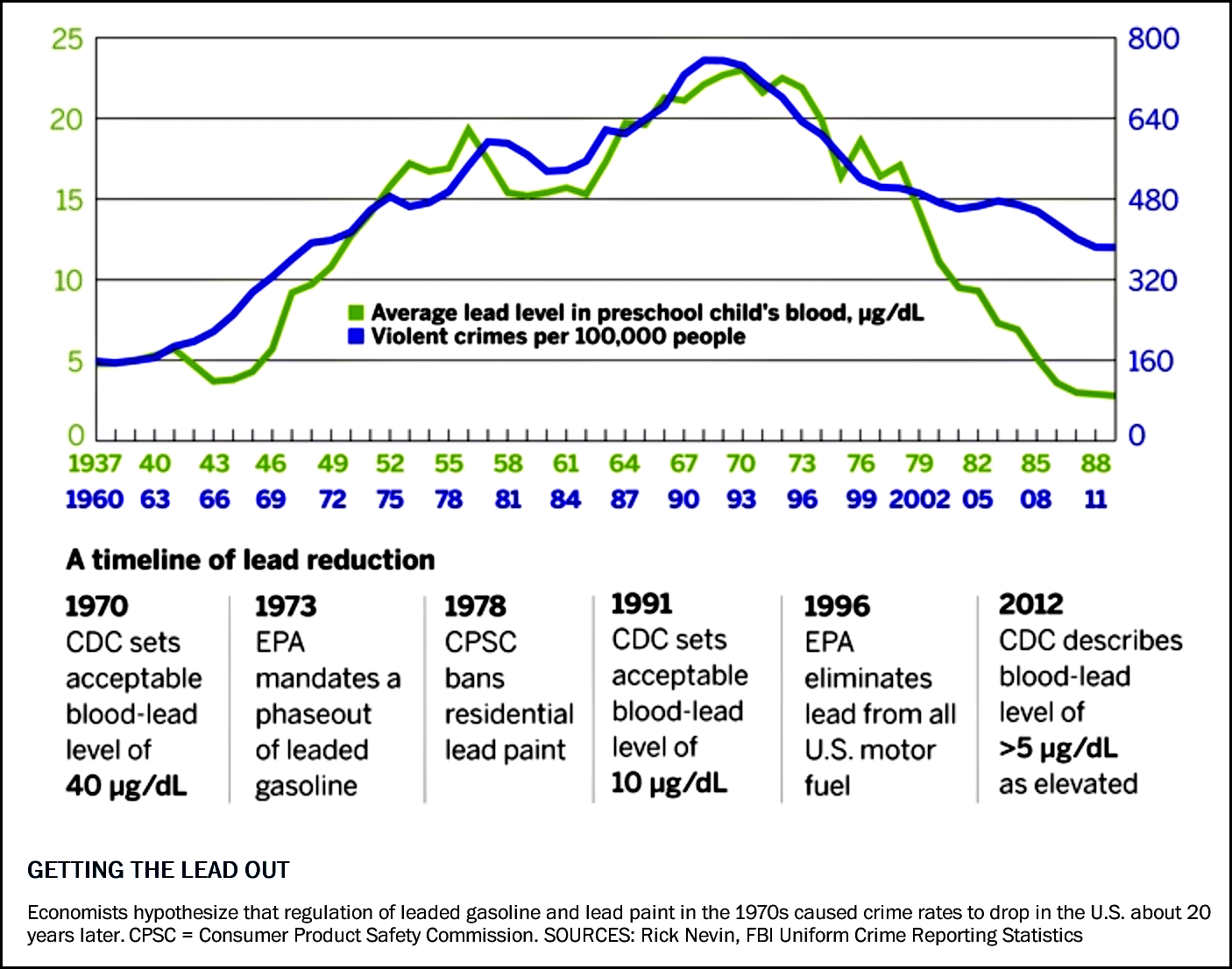 So what about Keith Belcher? I don't know the details of his case, but he probably was a superpredator. And because lead poisoning is permanent, he likely stayed that way for good long time. He may have been given a long sentence for the wrong reason, but there was also a right reason for giving him a long sentence.
But this is where things get tricky. Belcher needed a long sentence because he remained dangerous for a long time. Even today, at age 39, we might be taking a bit of a risk by releasing him. It's a very hard question to answer.
What's indisputable, however, is that by the early 2000s the lead-driven crime wave had declined massively. Teenagers and 20-somethings who committed violent crimes may have needed to be locked up, but they weren't uniquely dangerous and their sentences should have been half as long—or less—compared to sentences in the '90s.
But because we've never truly internalized the lesson of lead, we haven't done this. We're still terrified of teenage criminals, and we don't realize that they're far less dangerous than teenage criminals of a few decades ago. Sentences of 10 or 20 or 30 years make no sense for most of them. The most useful criminal justice reform we could make right now would be to cut prison sentences across the board by half or two-thirds. Mass incarceration, like lead poisoning, should be a thing of the past.