A Twitter conversation earlier this morning got me interested in looking at some basic data on remote work in America. The starting point came from Adam Ozimek of Upwork, who surveyed corporate executives and concluded that they were much more open to the idea of remote work than they had been before the pandemic. After all, remote work has lots of advantages.
Likewise, there have been a lot of news reports about people moving during the pandemic, usually from crowded cities to smaller towns where the risk of being infected by COVID-19 is perceived to be lower. After all, if they can continue doing their jobs from anywhere, why not?
Let's take a look at a couple of pieces of data. First off, here is geographic mobility over the past few decades:
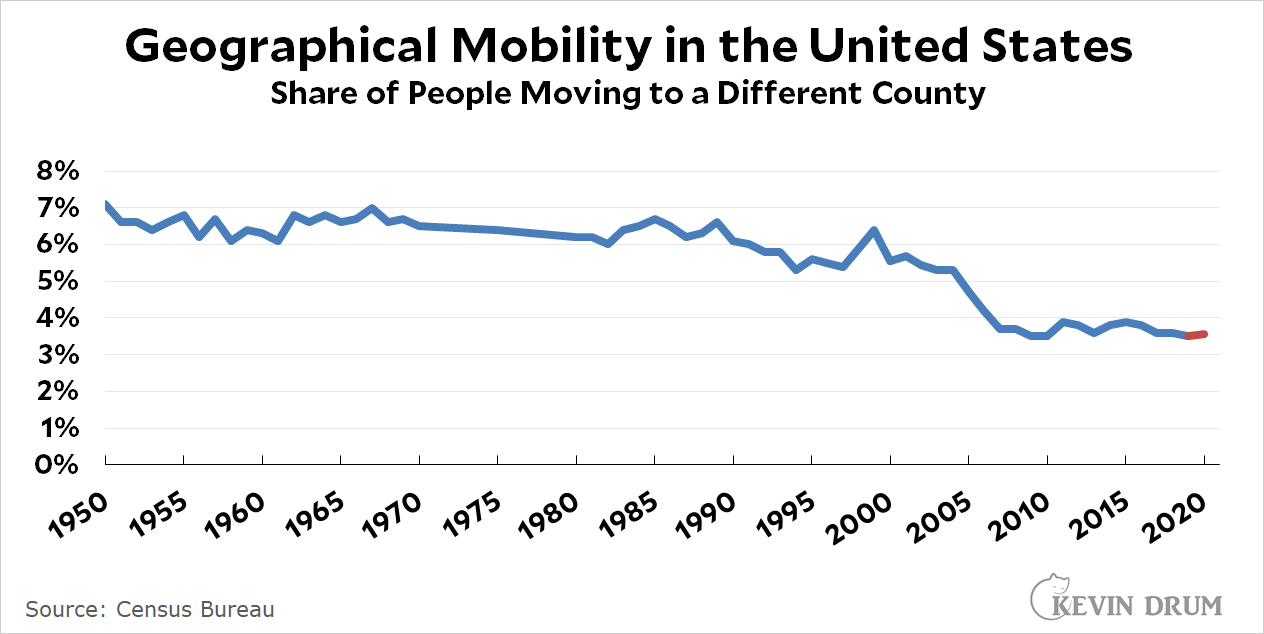
The data for 2020 is estimated from US Postal Service change-of-address cards, and the entire chart is only for (a) permanent movers who (b) move across county lines. As you can see, there's been a long-term decline in permanent moves, and even the pandemic didn't change that by more than a hair.
Here is the pre-pandemic trend in working at home, also based on Census data:
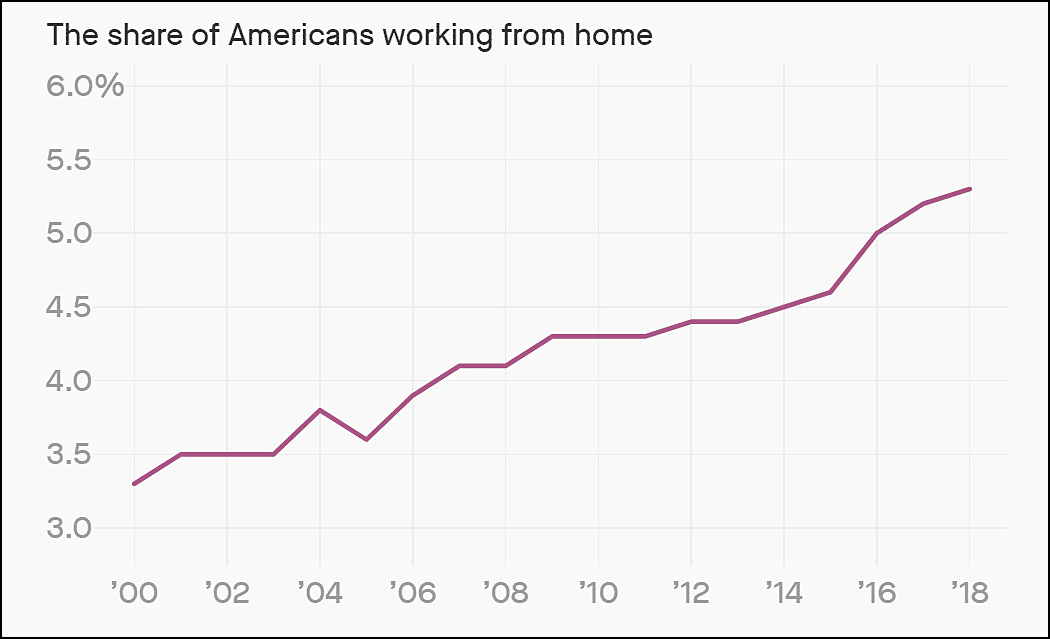
This chart is interesting but inconclusive. One interpretation is that despite the fact that remote work has lots of advantages, it's only grown by a meager two percentage points over the course of 20 years. That doesn't suggest an awful lot of enthusiasm for it even though—contrary to much punditry—I can assure you that corporate execs are keenly aware of its pros and cons and have been pondering it closely for years.
A different interpretation is that at 5.5% there's a ton of room for growth since, roughly speaking, about a third of Americans work in jobs that could be done at home. All it will take is for hiring managers and employees to be exposed to it and decide they like it.
These raw data posts aren't generally a place for me to make an argument. They're just places to present interesting data. So I'll just say that this is a good area to keep an eye on to test my basic hypothesis about pandemic behavior: It will very quickly go away and corporate life will return to its 2019 baseline. People don't really want to move, even as the cost of big cities continues to increase, and they've never warmed to remote work despite its myriad advantages. The big question is whether merely being forcibly exposed to it will change this dynamic significantly even though the low-hanging fruit has already been plucked. I don't think it will. Adam disagrees. Come back in 2023 and we'll settle this once and for all.