One of the lesser known provisions of the $1.9 trillion coronavirus bill is a "temporary" expansion of Obamacare subsidies:
The American Rescue Plan spends $34 billion expanding the Affordable Care Act subsidies for two years. The changes would make upper-middle-income Americans newly eligible for financial help to buy plans on the Obamacare marketplaces, and would increase the subsidies already going to lower-income enrollees.
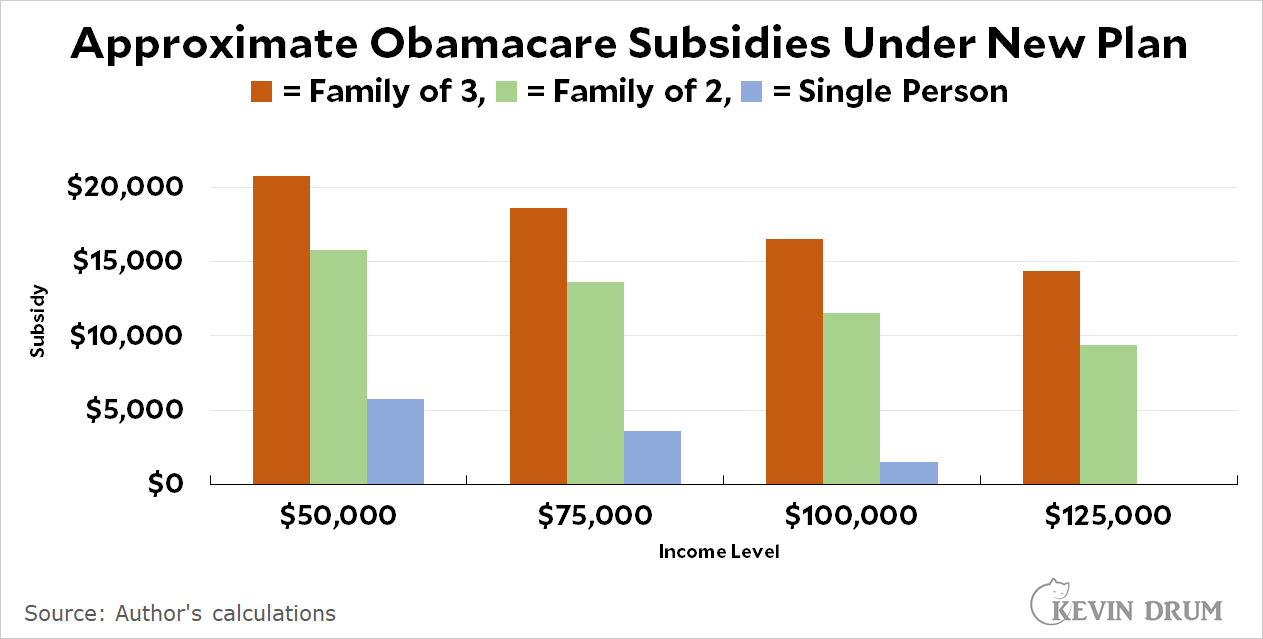
Subsidies would be increased for the poor and working class while the "subsidy cliff" for higher-income families would be abolished. Instead of federal subsidies ending suddenly at 400% of the poverty level (about $85,000 for a family of three), they would continue for people at all income levels, who would be limited to paying 8.5% of their income for health coverage.
The subsidy cliff has—quite fairly—spawned endless complaints from middle-class families, and for them this change would be gigantic. Today, if you make $85,000 and your health coverage costs $25,000, then you have to pay $25,000. Under the new plan, your maximum payment is about $7,000. In other words, your subsidy has gone from zero to $18,000.
This change has spawned surprisingly little pushback from conservatives, though last month the Wall Street Journal noted—correctly—that "The politics are such that the benefit will never be revoked." Probably so! The Journal also offered up the tired complaint that even a few very well-off families would get some subsidy money, but their heart wasn't in it since, after all, their core audience is the very well off. It was just a pro forma gripe.
On the other side of the aisle progressives are naturally disappointed that we aren't getting Medicare for All, but that was a pipe dream. There were never enough votes for M4A even if President Biden had supported it. Instead, what's likely to happen to Obamacare is the same thing that happened throughout Europe over the last century. Very few countries introduced full-on national health care in a single swoop. Instead, they passed limited programs and then expanded them steadily until, eventually, they were all but universal. And in every case there was lots of path dependence: improvements were all based on the existing system rather than uprooting the entire thing and starting over.
This is almost certainly how things will happen here too. Obamacare built on Medicaid and private insurance because that's what we already had. Biden is now building on that. Most likely, we'll eventually end up like Switzerland, which relies mostly on subsidies for private insurance, rather than, say, the system used in Sweden or France.
Is this the most efficient way of doing things? Nope. Then again, making Medicare universal isn't the most efficient way of covering everyone either. In any case, this is a big change, and it's especially a big change for the middle class, which progressives should pay a lot more attention to. This has been a huge pain point for many of them, and it's about to go away.
POSTSCRIPT: The big question now is whether Democrats will brag loudly about this. They should! It's a big new benefit for a lot of middle-class families.
Alternatively, centrists will be too timid to talk about something that costs a lot of money, and progressives will sulk in their tents because it isn't Medicare for All. It would be nice to avoid that this time around.