Here is the lead story in the LA Times this morning:
 As it turns out, this is not the product of intensive investigative reporting. It's based on a report written three years ago by the bar itself. And sure enough, as a matter of plain fact the Times' headline is correct:
 The biggest disparity here is actually between men and women, but among men the rate of probations handed out by the Bar comes to 3.2% for Black lawyers vs. 0.9% for white lawyers.
But wait! The author of the report is very clear about why this disparity exists: It's because Black lawyers get more client complaints in the first place and tend to have more disciplinary actions on their record:
 When you account for this, the racial disparity in probation actions vanishes—but the Times doesn't even mention this until the 33rd paragraph of its story:
Black men [...] are more likely than other lawyers to be accused of wrongdoing in the first place. The bar study found that 46% of Black male attorneys were the subject of at least one complaint. In other demographic groups, the rates range from 44% for Latino men to 17% for Asian females. The rate for white men is 32%. In what the study’s author called “a particularly striking statistic,” 12% of Black male lawyers have received 10 or more complaints.
The study does not explain why Black men receive more complaints. There are various hypotheses in the legal community, including racism on the part of banks that make reports to the bar and a preference for practice areas, such as family law and criminal defense, where there is more direct contact with clients and emotions run high.
I'm not an expert on this stuff, so I don't know where the real answer lies. But surely it was worth mentioning a little higher up in the story, especially since the State Bar has been working on reforms related to racial disparities ever since this report was released? Have any of those reforms been implemented? The most recent bar report to the legislature is here, and it sure looks kind of lame to me (see p. 101).
And how about the probation rate? Has that changed over the past few years? That would be especially interesting since the original report covered the years 1990-2009.
Maybe someday we'll find out. In the meantime, though, what a mushball story.

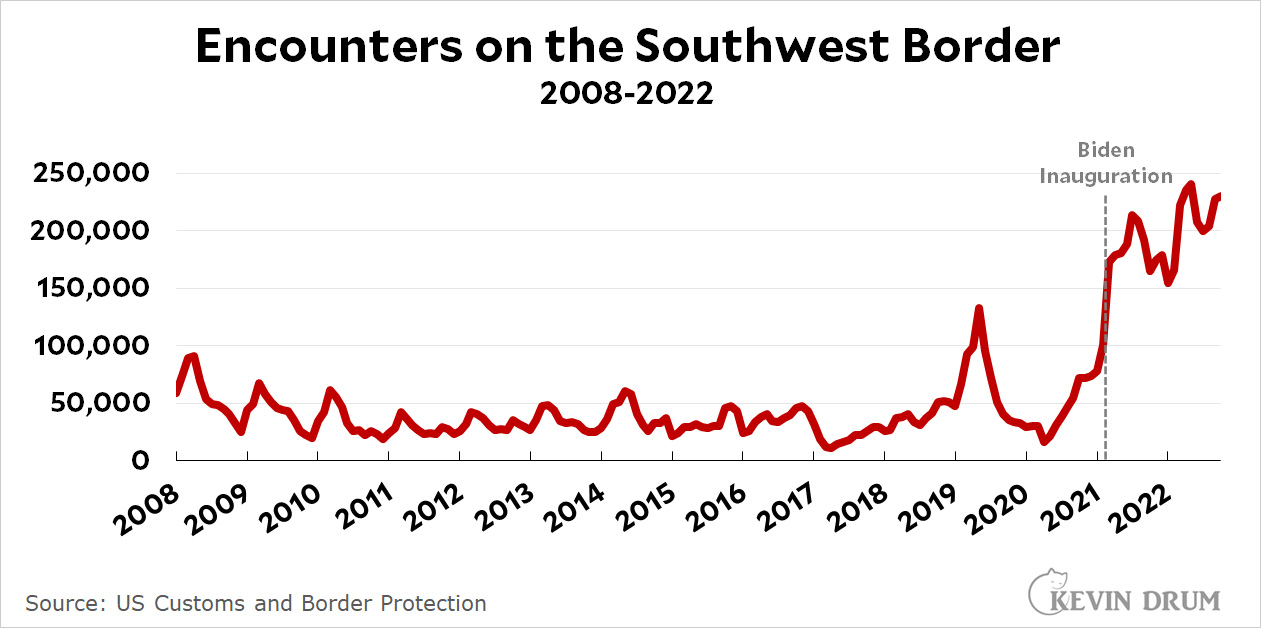 Border crossings spiked at the end of Donald Trump's presidency and since then have remained at about 5x the normal rate. Is this a crisis?