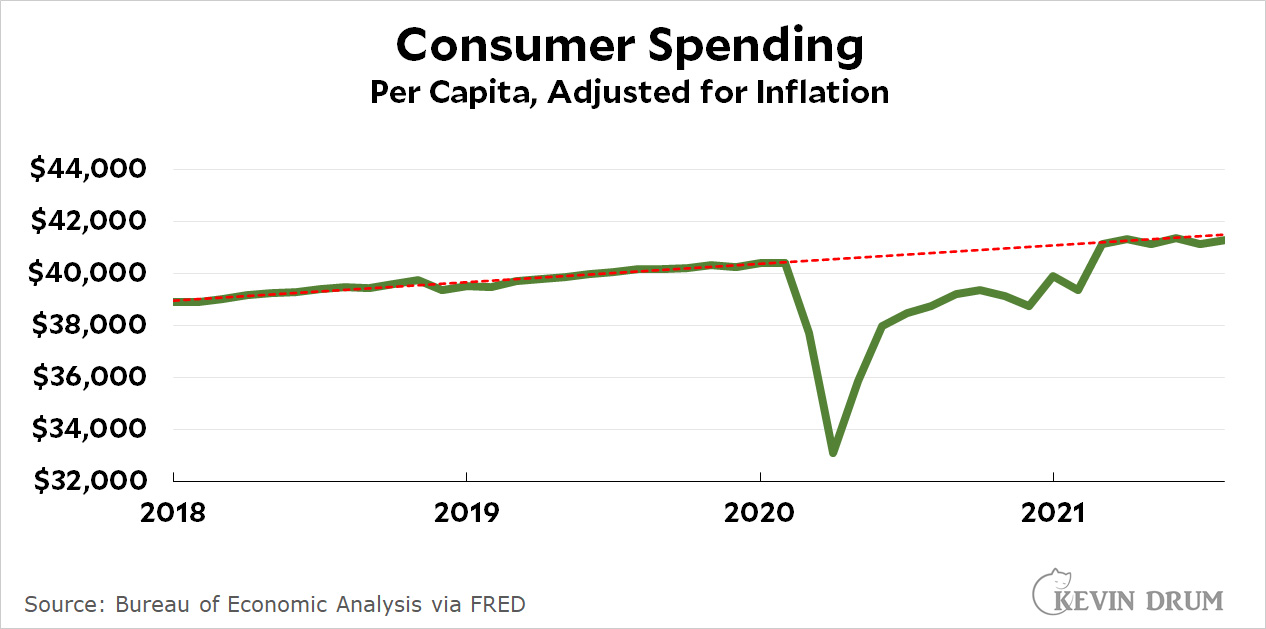
Tomorrow is inflation day, but to keep us occupied until then we got new JOLTS data today for the month of August:
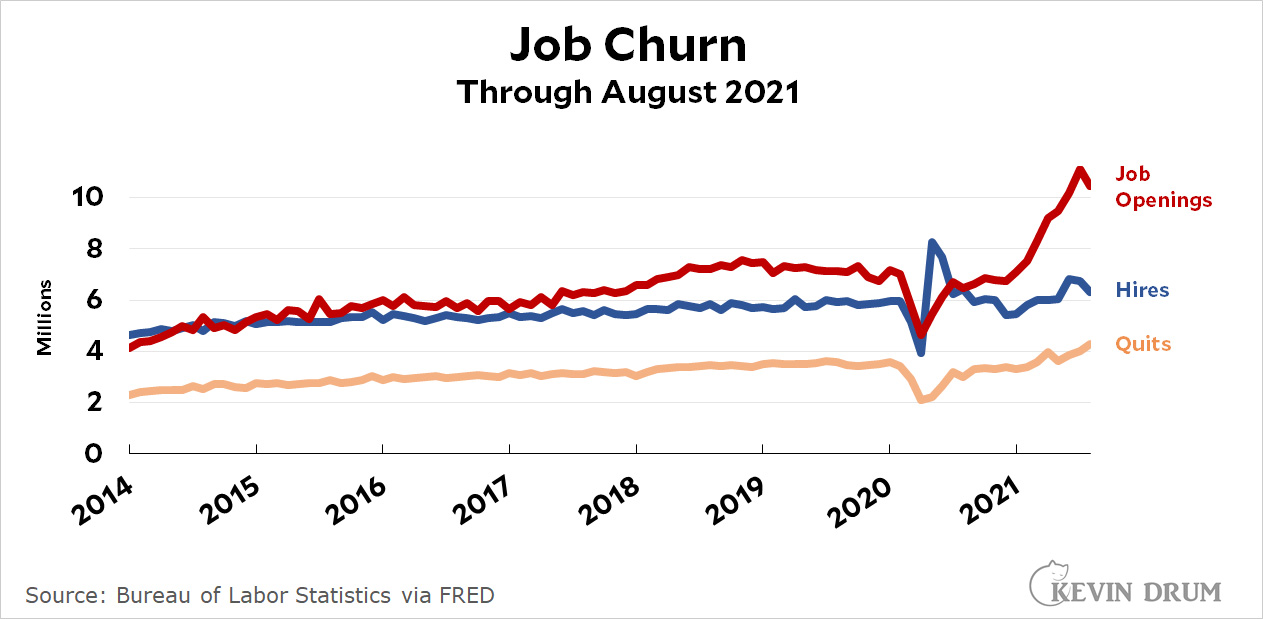
These numbers are peculiar: there were about half a million fewer jobs filled than in July (fewer hires + more quits) but that didn't cause job openings to increase. It caused them to decrease by about half a million.
Meanwhile, during the last 12 months quits have increased by 1.3 million. It sure doesn't look like people are worried about finding another job even though the number of hires is lower than it was a year ago.
The job market seems to make little sense these days. People are quitting their jobs in increasing numbers, which is normal during an economic recovery, but employers aren't hiring more people—which is very much not normal during a recovery. So what happened to all these people who quit their jobs? Why didn't employers try harder to keep them? And is the gap between job openings and hires really as huge as it seems?
The conventional theory at the moment is that workers are "holding back," living off their sweet government bennies while they look for better jobs. Increasingly, though, this doesn't make a lot of sense. I mean, sure, a lot of the jobs on offer are crappy—fast food, retail, delivery, etc.—but are there really millions of people who are convinced they can do better just because a year has passed? That strikes me as a surprisingly unrealistic view of things.
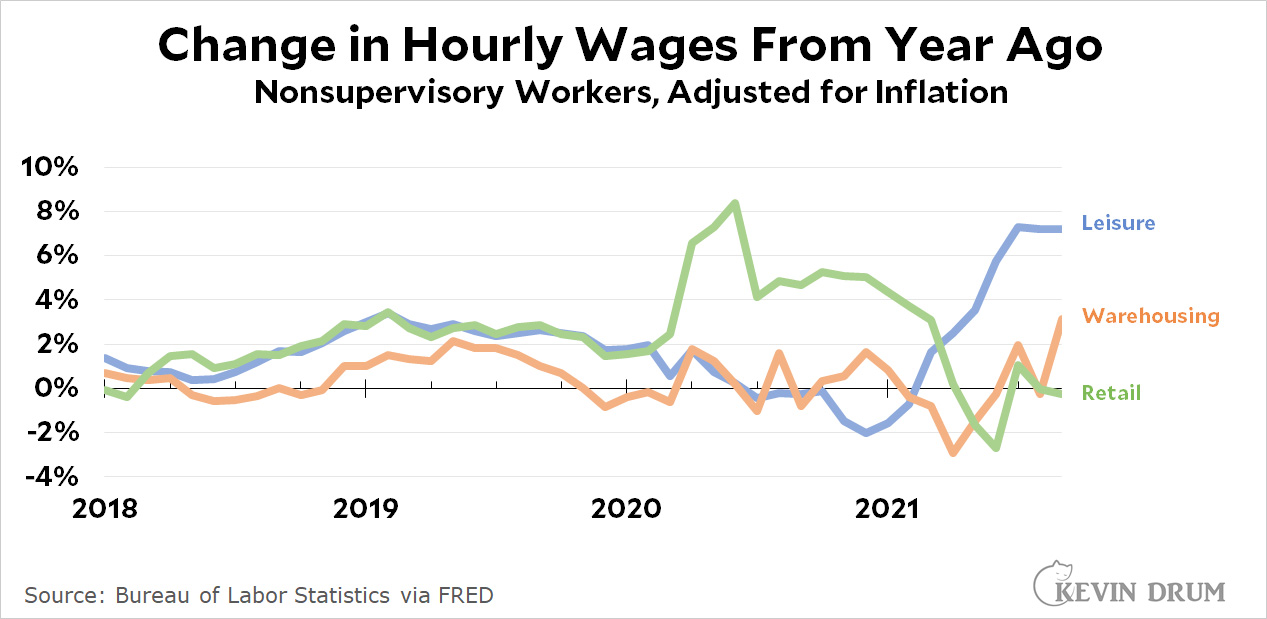
As for employers, a huge gap between job openings and hires should prompt them to offer sharply higher wages. Within traditional low-wage industries, there's evidence of this in leisure and hospitality, but not elsewhere:
Hum de hum. If it seems like I'm rambling, it's because I am. I truly don't know exactly what to make of all this. It's almost as if workers and employers are playing a game of chicken, waiting to see who caves in first.