An op-ed in today's New York Times discusses an evergreen topic: prescription drug shortages. But how many drug shortages are there? Emily Tucker cites three sources which provide answers of 160, 49, or 37 for the year 2022. Here's the FDA's number:
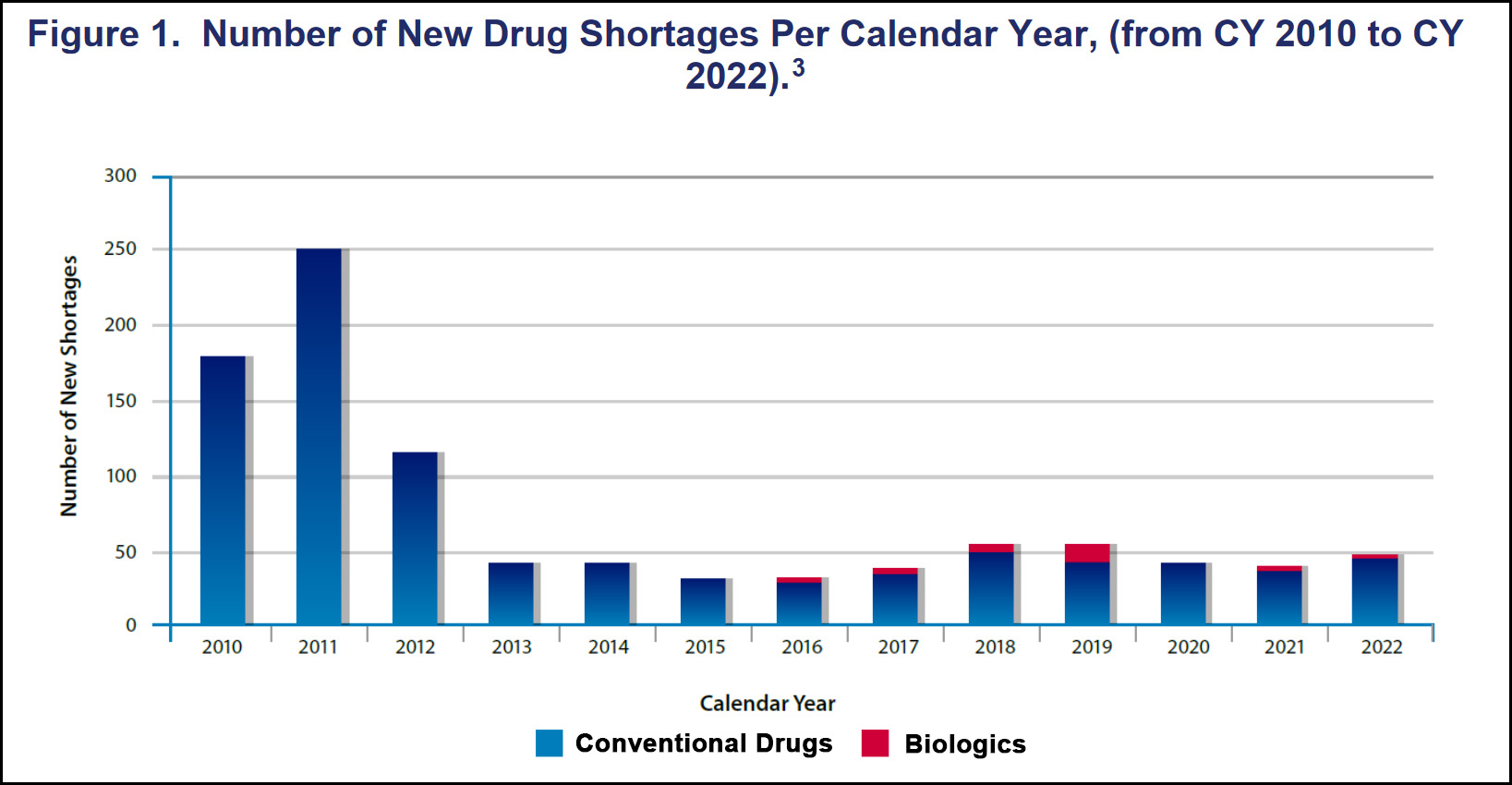 If we use this number—which is about the same as that reported in Europe—it represents a little less than 0.3% of the 17,000 pharmaceuticals currently cleared by the FDA. I'm reluctant to downplay the severity of shortages for patients who need these drugs, but I wonder realistically if this number can get an awful lot lower?
One thing Tucker mentions is that large hospital chains often get wind of shortages before others. When that happens, they order huge quantities, which just makes the shortage worse for everyone else. Oddly, she doesn't mention this as something that could be addressed, even though it seems quite likely that the relevant regulatory body could issue rules about hoarding fairly easily.
Instead, she wants legislation to enforce higher quality factories; more adaptable factories that can increase production easily; and buffer stocks of essential medications, presumably held by the federal government. I guess that sounds OK, though I wonder how effective it would really be, especially since (a) the FDA already mandates pretty high quality standards and (b) factories that can increase production more easily is just another way of asking for bigger factories that normally run at, say, half their capacity. As for buffer stocks, that sounds doable, though it depends on just how many drugs we're talking about and how stable they are over time.
All this said, it doesn't appear to be the case that the drug shortage problem is getting worse. Nor is it the case that it's been around for two decades with nothing being done about it. Drug shortages have been cut by about two-thirds since 2010.